Frank Ward in Exposure 2013 at the PRC in Boston

The 18th Annual Photographic Resource Center Juried Exhibition opens June 6, 6:30-8:00. That is tonight at 832 Comminwealth Avenue, Boston, MA. This Accordion Player is on the high pastures of Central Asia off a road heading from Osh, Kyrgyzstan to Kashgar, China. There will be a half dozen of my pictures from The Drunken Bicycle series at the PRC with seven other selected photographers.
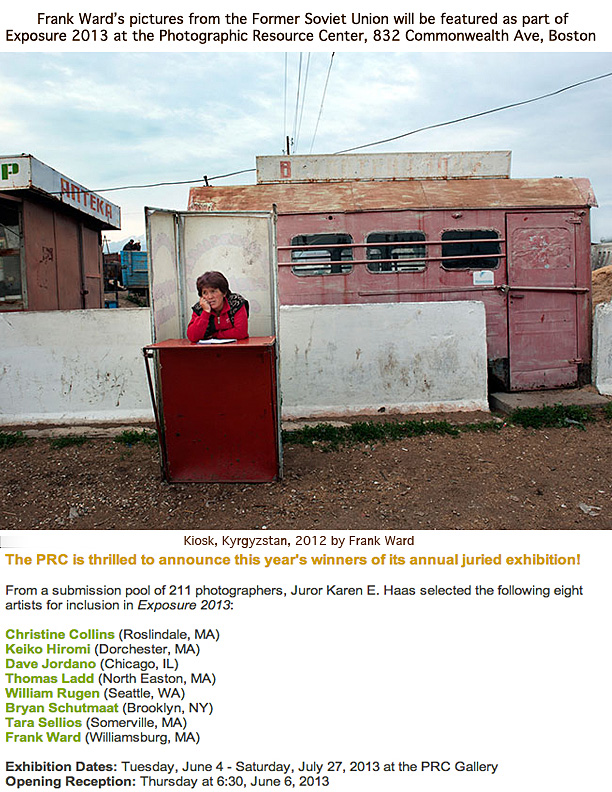
Neither of the above pictures are in the exhibit. You will have to go to see what is included.
Claire’s Footprint

My daughter Tobey was telling me about tiny houses. These alternative homes are often no bigger than 500 square feet and are an attractive option for those with the intention to live with a smaller footprint. That’s Tobey and Porgy in the picture above as we walk to Claire’s house, about a mile down a mud road.
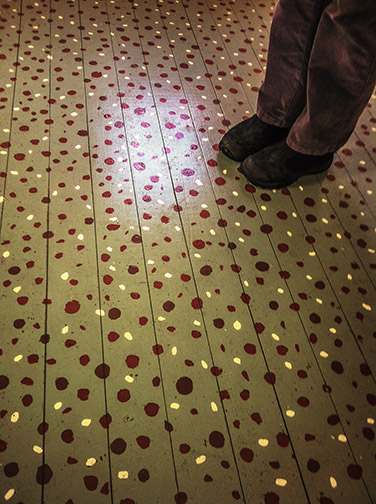
Here are Claire’s feet as we stand in her kitchen. She painted the floor with leftover house paint.

Tobey admires the kitchen. The house is off the grid. Claire has solar power backed up by a generator. Her stove is a combination of wood and gas and her refrigerator is propane powered.

Claire’s water system is solar powered. She says she has to drain the pipes if she is away overnight in the winter.

This is Cinderella, she got her at FAO Schwartz in New York when she was a child.
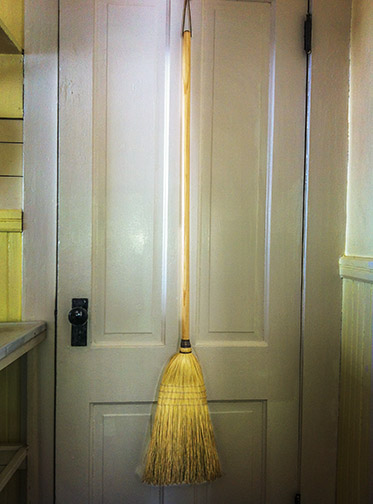
The house is beautiful and well swept.
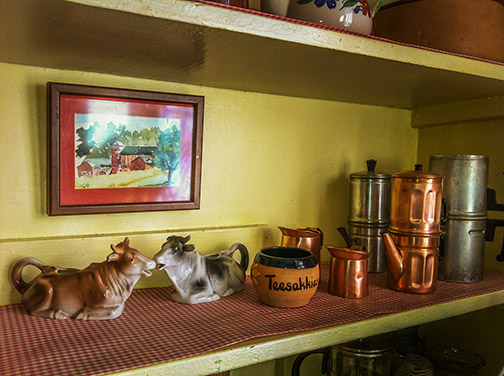
It could be a museum.

The pictures on the walls are amazing, and she does her own wallpapering.
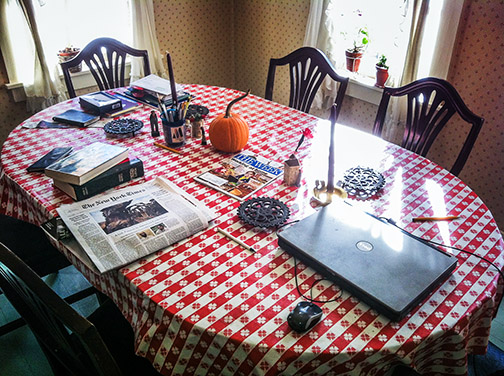
I don’t mean to give you the idea that Claire lives as if in an earlier century. She has a laptop and today’s New York Times.

Claire doesn’t even have a tiny house. She simply has a small footprint. Her choice of life style reminds me about intention. We all live with intention. We simply don’t ask ourselves what our intentions are. When you think about your intentions, dive past the layers and daily reasons for doing what you do. Look into your root aspirations and you may find that your deepest intentions should not be overlooked.
Centering on the Cape

Sandy Neck, 2013
These pictures from Cape Cod, Massachusetts were made on the morning after my Taunton pictures of the last post. These landscapes are from the Upper Cape, which is actually the lower Cape geographically. Sandy Neck Beach is where my high School sweetheart and I would drive to whenever we had a car for a few hours.
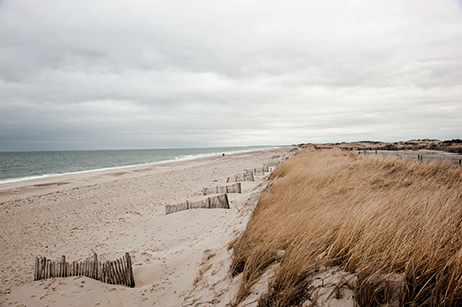
Sandy Neck Beach, 2013
The beach was a target range for the Navy during World War II. We would walk the dunes searching for big bullets and such.

Gateway to the Sandy Neck Parking Lot, 2013
It seems that I am taking the same picture over and over again. Some days are like that. Especially when the pictures are about roads not taken. To get it out of my system here are more Cape Cod walkways, pathways, roadways, etc.
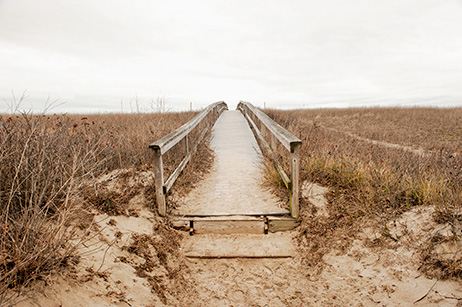
Boardwalk, 2013
The road not taken in my life upon graduating from high school was my choice not to enroll in the Massachusetts Maritime Academy and not to join the Merchant Marines. I love the ocean, but I’m not a sailor. As a teenager, my idea of being a sailor was based on what I read in Kerouac’s On the Road. Upon visiting the Maritime Academy I immediately discovered that sailors were not a gang of beatniks. I then read Kerouac’s Dharma Bums and had a much clearer fantasy of what I wanted to be.

Boardwalk 2, Sandwich, 2013
I decided to follow my girlfriend to the University of Massachusetts. That is where I became a dharma bum, a filmmaker and a photographer.

Old Sandwich Game Farm, 2013
Back to the photography part, some days it is difficult to get things out of the center of the frame. It’s like walking on a road. It is empowering to simply walk down the middle. The Buddha encouraged the “middle path” of life. My life has been slightly off-center, but I think centering is a good idea in general. I’ll close with the off-center picture below.

Sandwich, 2013
You Can Go Home Again
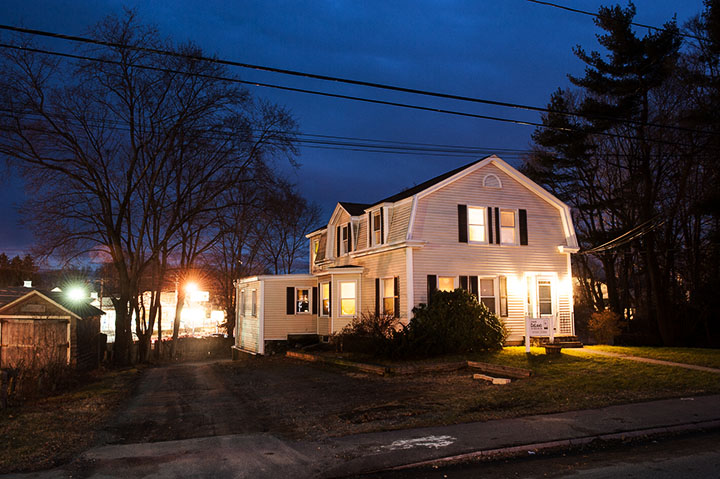
Home, Taunton, Massachusetts, 2013
For over twenty years I have been concentrating on photography projects outside of the United States. A week ago I returned to my hometown of Taunton, Massachusetts to see what had changed since I left there to go to college in 1967.
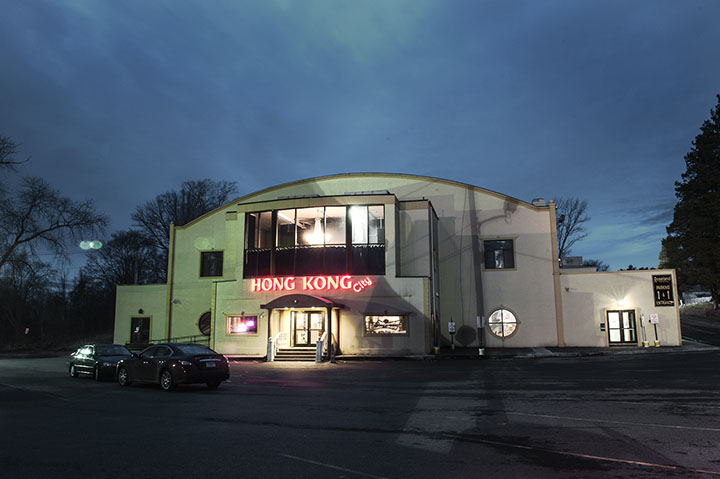
The dance hall in my old backyard. I remember when Ray Charles played there in the early 60s.
The Roseland Ballroom was on the second floor. The first floor was a bowling alley where I would hang-out almost every night of my high school years. Now, the first floor is a restaurant and the upstairs is a banquet hall. The parking lot abuts my old backyard.
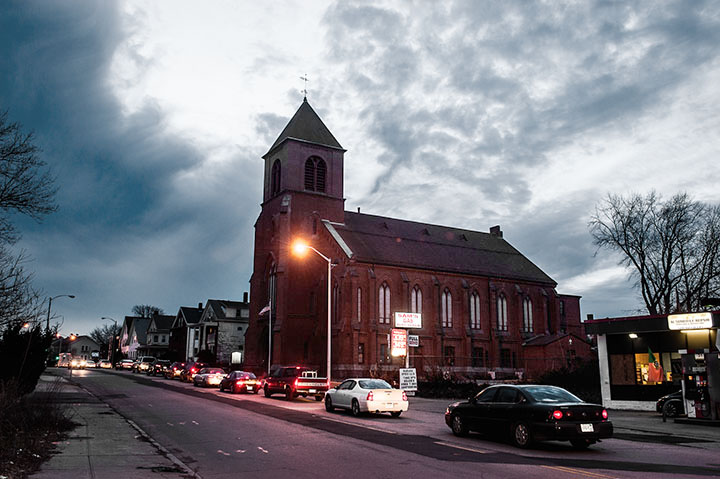
Winthrop Street Baptist Church, Taunton, MA, 2013
The last day I went to this church was the day I was baptized at age 13. I did not feel transformed as I was lifted out of the baptismal water. A year or so after, I began reading about Zen Buddhism and sitting in my version of Zen meditation.

Shop on the corner, Taunton, MA, 2013
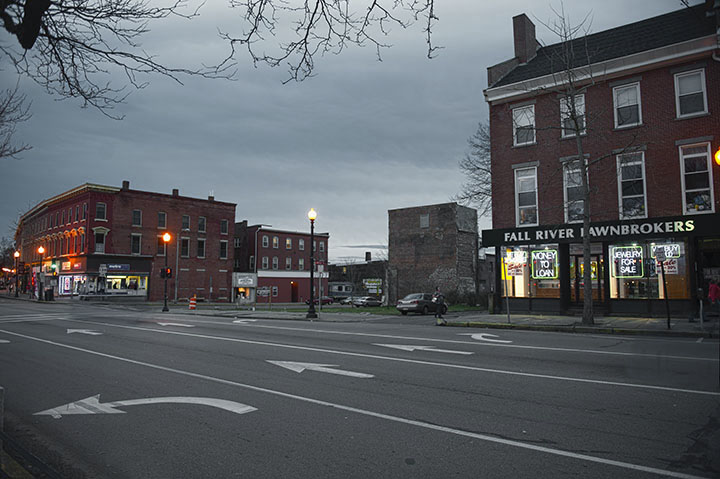
Downtown Taunton has changed immensely since I left. I didn’t remember this building on the corner of Winthrop and Cohannet Streets. I also didn’t get a chance to look for the soda shop on Cohannet where I got my first job as a soda jerk.
View from the Taunton Green, 2013
Taunton Green, 2013
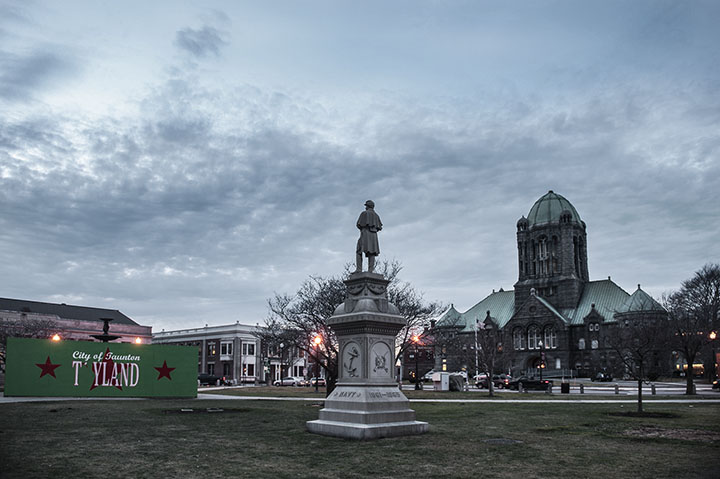
The Taunton Green is my standard reference size for an acre of land. I don’t know if it really is an acre, it’s just something my mother told me.
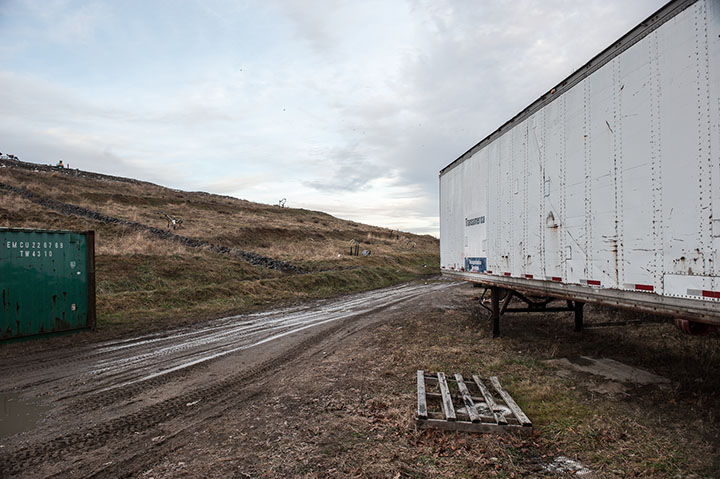
The old landfill of the town dump.
The landfill portion of the Taunton dump has become a methane field.
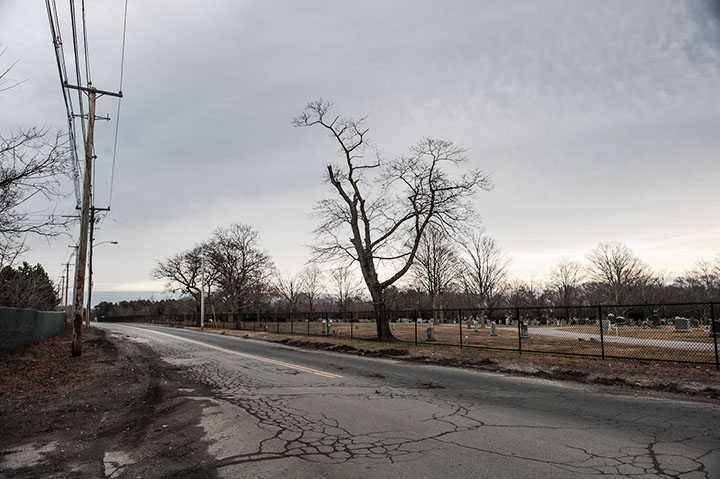
Cemetery Road, Taunton, 2013
Across the street from the methane field and the town dump is the stretch of road where teenagers with cars would go parking (AKA “necking”) in the 50s and 60s. Maybe they still do.
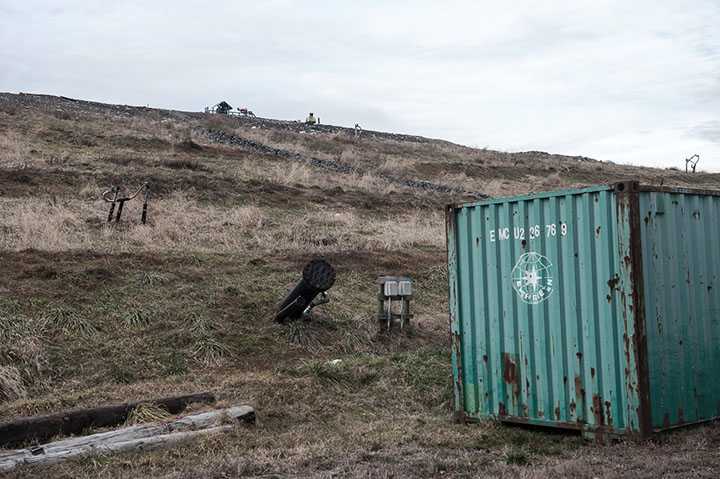
Methane Field, Taunton, MA, 2013
I’ll close with another picture from the town dump. My family moved out of Taunton when I went off to the University of Massachusetts. They moved to Cape Cod. I hope to add some pictures from the Cape soon.
The Drunken Bicycle opens tonight and other more important news.
The Vermont Center for Photography
Friday, Nov. 2, 5:30-8:30, 49 Flat St., Brattleboro

The Gate of Hell, Turkmenistan, 2011, Frank Ward
Above is a picture of Vivian and a friend from the US Embassy in the desert looking at a Soviet mining accident from the early 1970s.
This week, all hell broke loose in New Jersey, New York and elsewhere in the devastating wake of Superstorm Sandy. Time Magazine called on 5 photographers to use Instagram to document the storm and its aftermath.
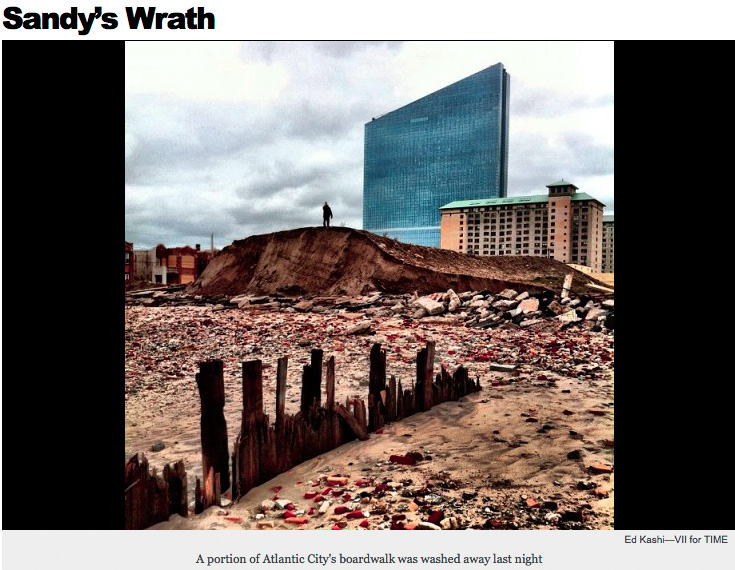
Time Magazine’s photo editor Kira Pollack says that using Instagram was an experiment born out of necessity. Read the Forbes article here.
Today from Time’s LightBox comes a portfolio and short interview with Joel Meyerowitz. I first fell under the spell of his 8X10 view camera work from Cape Cod. He is best known for his work at “Ground Zero”. Some of both portfolios are in this slideshow.
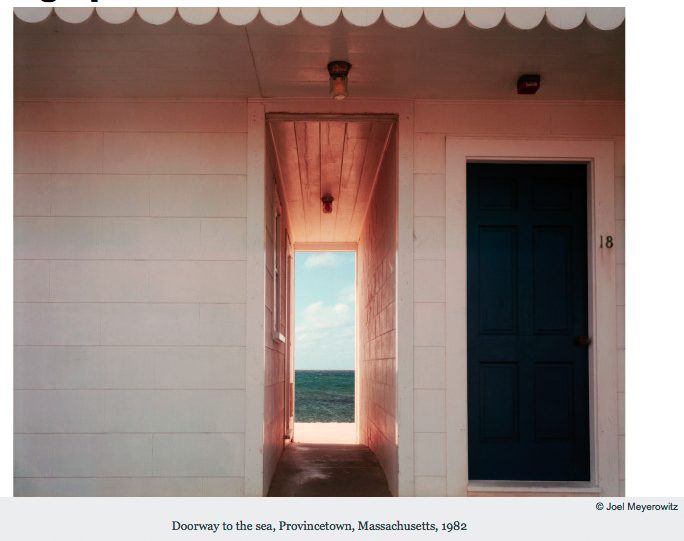
Meyerowitz says, “I’m really out there to feel what it feels like to be alive and conscious in that moment. In a sense, the record of my photographs is a record of moments of consciousness and awareness that have come to me in my life.” Read more: http://lightbox.time.com/2012/11/02/joel-meyerowitz-taking-his-time/#ixzz2B5ONfwJW.
I second Meyeowitz’s quote. The camera keeps me aware. Carrying a camera helps to wake me up. I hope my students figure that out.
The Drunken Bicycle in Brattleboro
The Drunken Bicycle—Travels in the Former Soviet Union
An Exhibition by Frank Ward
Presented by the Vermont Center for Photography
At 49 Flat Street, Brattleboro, Vermont
From November 2 – December 2
Opening Friday Evening November 2 , 5-9pm for the monthly Brattleboro Gallery Walk. Please check http://www.vcphoto.org for the VCP’s daily schedule.

Kiosk, Karakul Animal Market, Kyrgyzstan, 2012, All photos by Frank Ward
The above picture is the only image in this post that will be in the show. Below are pictures that didn’t fit.

Lenin, Irkutsk, 2008
I first came upon a drunken bicycle in Irkutsk, Siberia. I didn’t get a good picture of it. There was a crowd and a lot of drinking, neither of which is uncommon in Siberian city parks on the weekend.
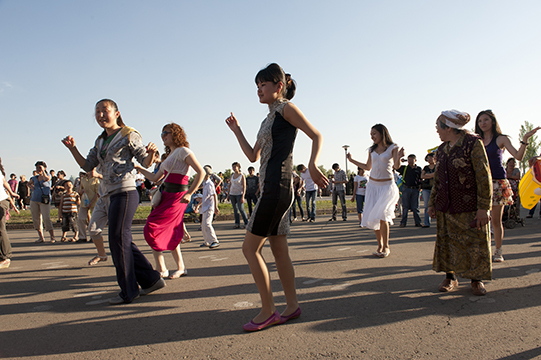
Dance party in the park, Astana, Kazakhstan, 2012
A drunken bicycle is a conventional bike outfitted with a reverse steering gear. The owner/ operator demonstrates how easy it is to ride and awards a beer if one can travel a few meters without falling. This entertainment always attracts a crowd but, I have never seen a customer navigate the counter-intuitive bicycle successfully.

Twins, Irkutsk, Siberia, 2010
The drunken bicycle is an apt metaphor for life in the Former Soviet Union. The bureaucrats appear to sway on a drunken bicycle; the hapless traveler spends his days confused by the swing of it; and this photographer is continually influenced by its contradictions.
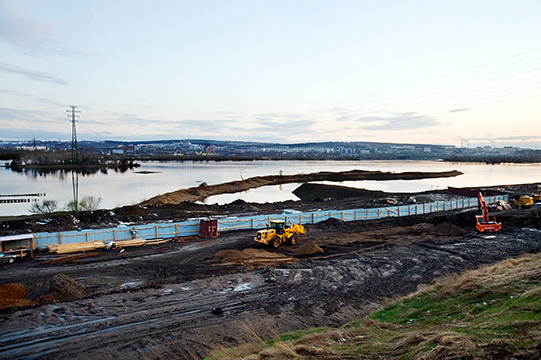
Destruction of the Angara River waterfront, Irkutsk, Siberia, 2010
Curious pleasures accompany my confounded expectations. The security guard repeating, “I love you,” as he gestures for me to delete pictures of a destroyed habitat (above). Or the policemen who accuse me of stealing strategic military secrets because I photographed a World War II tank on display in a city park. Or the graffiti scribbled on a high school desk: “Stalin is gay.”

Marilyn Monroe, Vladivostok, Russian Far East, 2008
The publicly dour Russians think we Americans always have a foolish grin pasted on our faces. Well, I do, but I am not laughing at the former Soviets. It is the joy of seeing a painted wall mural of Lenin blowing a kiss to Marilyn Monroe (above), or my surprise at a grandmother asking me to photograph her in a bikini at the beach (below). The FSU is a paradise of paradox, where the landscapes are limitless and the people are full of passion and pain.

Babushka at the beach, Odessa, Ukraine, 2005
I don’t think I’ll have room for any pictures from my trips to Ukraine in 2001 and 2005.
All readers are invited to the opening so please come if you can.
Otherwise, the VCP Gallery is only open on Fridays and Saturdays 1-6 and Sundays 11-3.
Exhibitions in Vermont and at the Victory Theater in Holyoke
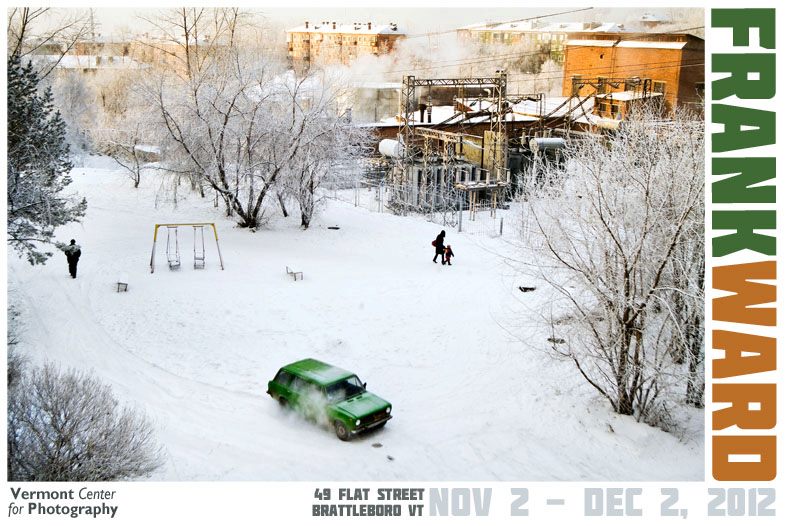
This November, the Vermont Center for Photography is hosting The Drunken Bicycle, Travels in the Former Soviet Union.
I finished doing the selection and framing of my upcoming one person show in Brattleboro. I printed the pictures at 24X30 or 24X36 inches on fiber and baryta papers. Half the show is from my work in Central Asia this past spring and summer. In all, three quarters of the pictures have never been previously exhibited. I have published some, but only one of the 2012 pictures has appeared in this blog. I’ll blog later with more information about the location and opening (evening of Nov. 2nd) of the exhibition.
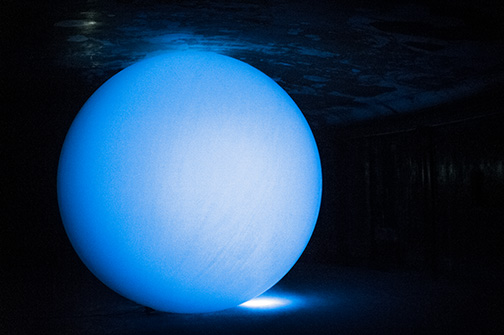
A floor to ceiling sculpture by Chris Nelson at the Victory Theater in Holyoke.
To celebrate the labor intensive end to producing my show, I went to the unrenovated Victory Theater in Holyoke, Massachusetts to see the wonderful installations offered by our areas remarkable artists.
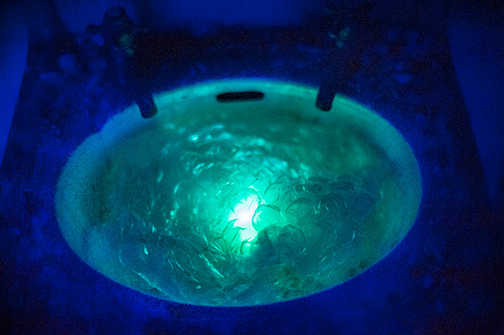
A detail of Amy Johnquest’s installation in the Powder Room.
Blue light seems to be a recurring motif in the dimly lit Victory Theater.
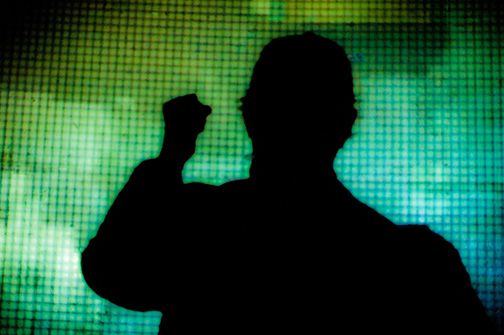 Angry Frank (self-portrait) with a detail of Kari Gatzke’s projection/installation.
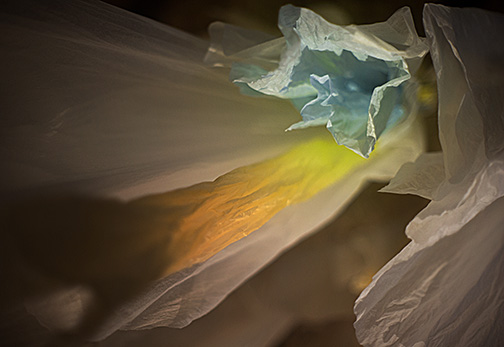
Detail from Olivia Bernard’s sculpture/installation.
I hope artists don’t get mad about my detail pictures. Plus, I left several artists out because I didn’t get a picture of their work. This is a blog about photography so I hope Chris Willingham, Angela Zammarelli, Joshua Vrysen and Torsten Zenas Burns understand.
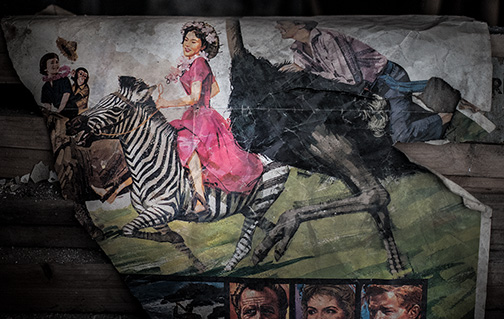
Detail of Taiga Ermansons’ installation.
The exhibiting artists were quite sensitive to the beautiful decay inside the Victory. Their work often incorporated the tattered surroundings as if a wand was waved to let something glorious rise from the rubble. The Victory is due for renovation this June. I hope to photograph there with my classes before the reconstruction begins.
The Photographer’s First Challenge
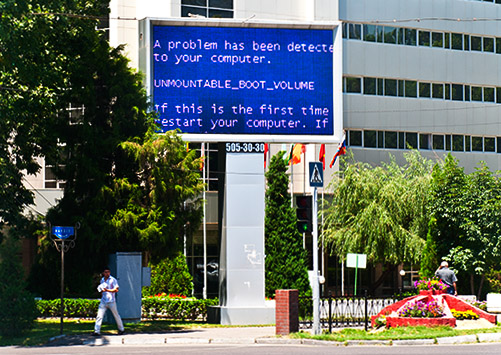
Digital Billboard, Tashkent, Uzbekistan, 2012, all photos by Frank Ward
I saw this billboard outside our hotel in Tashkent. It reminded me of our digital lab at Holyoke Community College. The good news is that our digital photo lab is running with the fewest problems of its short history.
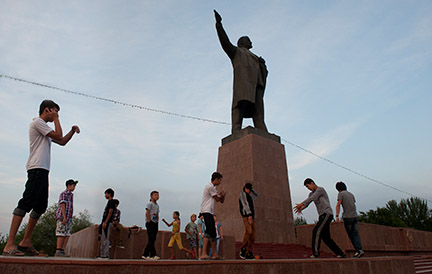
Hip Hop at Lenin’s Statue, Osh, Kyrgyzstan, 2012
My students are the best part of the new semester. I am teaching two small Digital Fine Art classes and a huge Basic Photography class. Students love working with classic black and white film. The joy of seeing one’s picture appearing on the surface of a previously white piece of paper still cannot be matched. Well, actually, iPhones are amazing too.
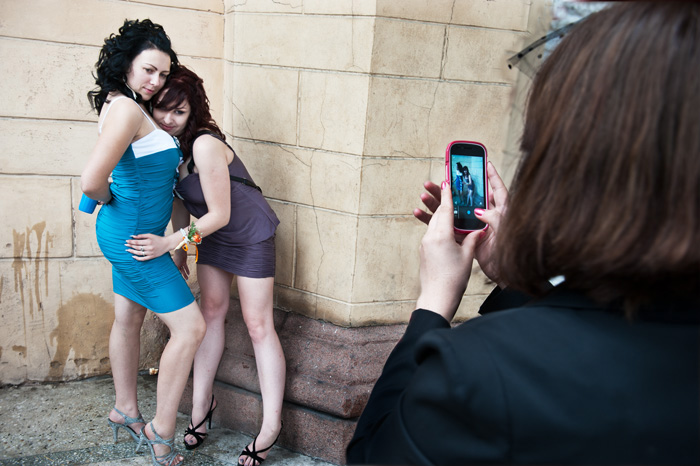
Smart Phone Action, Bishkek, Kyrgyzstan, 2012
I’m sure my digital/film students will rise to the challenge of making fresh pictures in a world where millions of pictures are made every day.
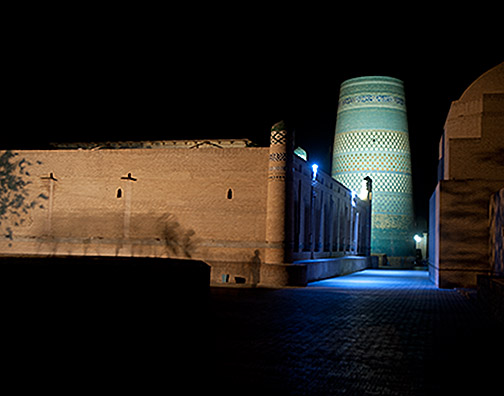
Light and Shadow, Khiva, Uzbekistan, 2012
There is a good reason to pick up a camera and point it at the world. We do it to as a response to all that is happening around us and inside us. A photograph is a personal gesture that tells others about our world view. A photograph is the dance of light and shadow frozen in time and space. I don’t think any other art can stop the world so we can contemplate it for as long as our heart desires.
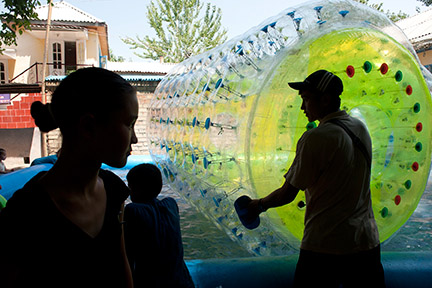
Water Park, Osh, Kyrgyzstan, 2012
The photographer’s first challenge is to find the light.
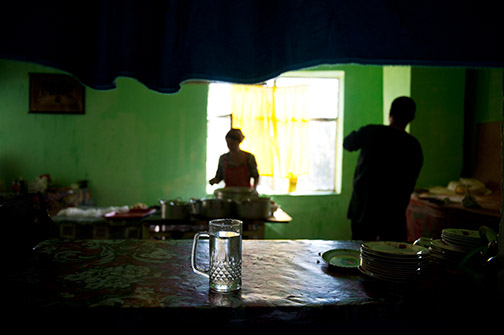
Restaurant Kitchen, Ghonchi, Tajikistan, 2012
Of course, photography isn’t just about sunlight and windows.
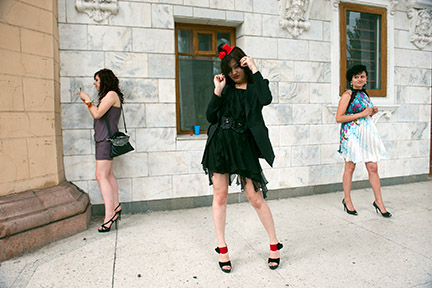
Waiting out the Rain, Bishkek, Kyrgyzstan, 2012
A rainy day is a great time to make pictures. Both light and shadow are soft and beautiful. If you like people pictures, soft light is often the best. It’s true for landscapes too.
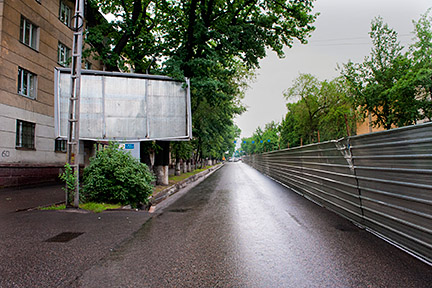
After the Rain, Almaty, Kazakhstan, 2012
Our first assignment in Basic Photography is to photograph light, form and texture. Once you find the right light, form and texture usually takes care of itself. Well, you do have to have interesting forms. Fortunately, the world is full of them.
The Back to Photo School Post

Photo Class in Isfara, Tajikistan
It has been a 5 month hiatus for The Coruscating Camera. Most of the photographers and students that I worked with this summer in Central Asia had active FB accounts, but my WordPress and Blogspot blogs were blocked in Kazakhstan, Kyrgyzstan and Uzbekistan.

We met a group of party people on the high pastures of Kyrgyzstan. They had a great accordion and lots of vodka. We joined them for some dancing.
I was travelling throughout the ‘stans with the support of the US Department of State. My wife Vivian works as an English Language Specialist and I was a Cultural Envoy presenting workshops on photography.

Inside the Isfara classroom in Tajikistan.
I’ve been editing the pictures for a one person show at the Vermont Center for Photography in Brattleboro this November. This selection probably won’t be included. These pictures are more about teaching and traveling for 7 weeks.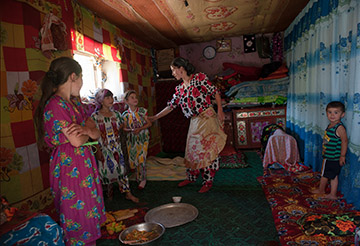
- We met this family on the road to Panjikent, Tajikistan.

Teaching in a well equipped studio in Urgench, Uzbekistan. Photo by Muhayo Aliyeva

Dancers, Urgench, Uzbekistan.
The above is part of a performance welcoming me to the Urgench State College of Arts. What a talented group of students and faculty.
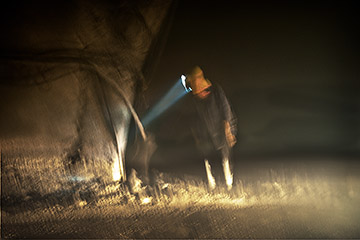
Inside the 4 mile long tunnel under a mountain in Northern Tajikistan.
Our Department of State team, who often travelled with us, described this as the “Tunnel of Doom”.
Below are a few more pictures from teaching and hanging out with students.

Preparing for a workshop in Panjikent, Tajikistan.
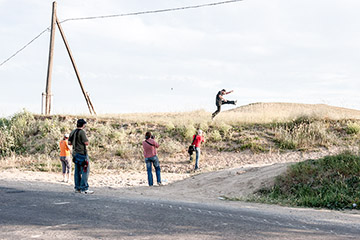
With students on a fieldtrip in Sukok, Uzbekistan.

Eating grapes in Bishkek, Kyrgyzstan

At the American Corner in Dushanbe, Tajikistan.

Khiva may be my favorite place in Uzbekistan. It has a quiet beauty and stimulates a sense of wonder. Wonder is one of my favorite feelings.
I didn’t include any pictures from Kazakhstan because I posted a couple of times from Almaty at the beginning of our program. If you didn’t see those posts, go to Asia Central. There is also more about Urgench, Uzbekistan there.
And check out frankwardphoto.tumblr.com for more from Astana, Kazakhstan, one of the world’s weirdest cities.
Gregory Thorp: Visiting Artist at HCC
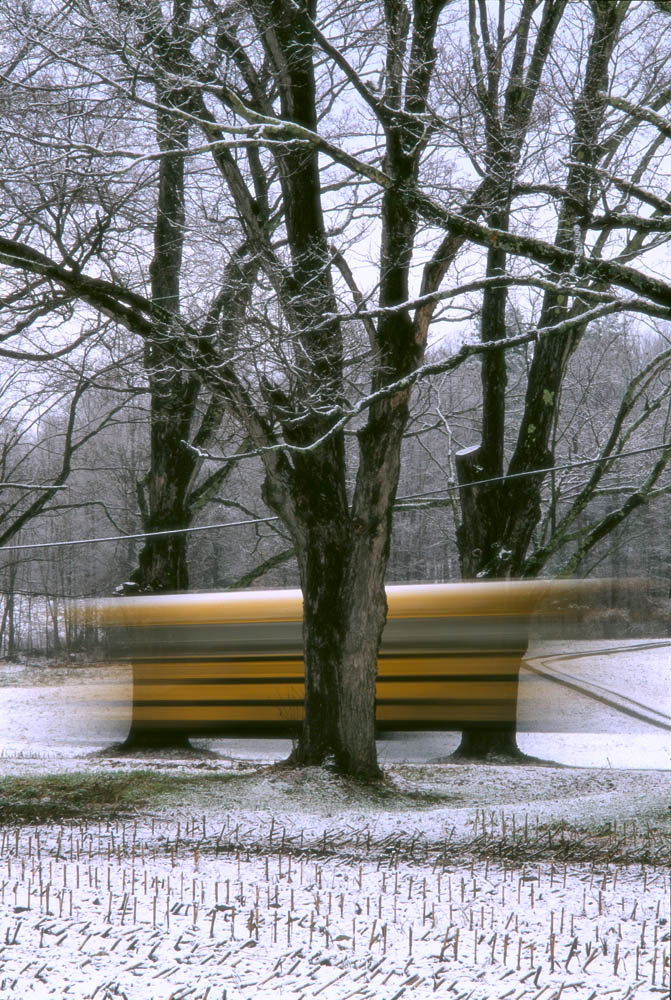
from winter, to spring, to summer from "the school bus series" by Gregory Thorp
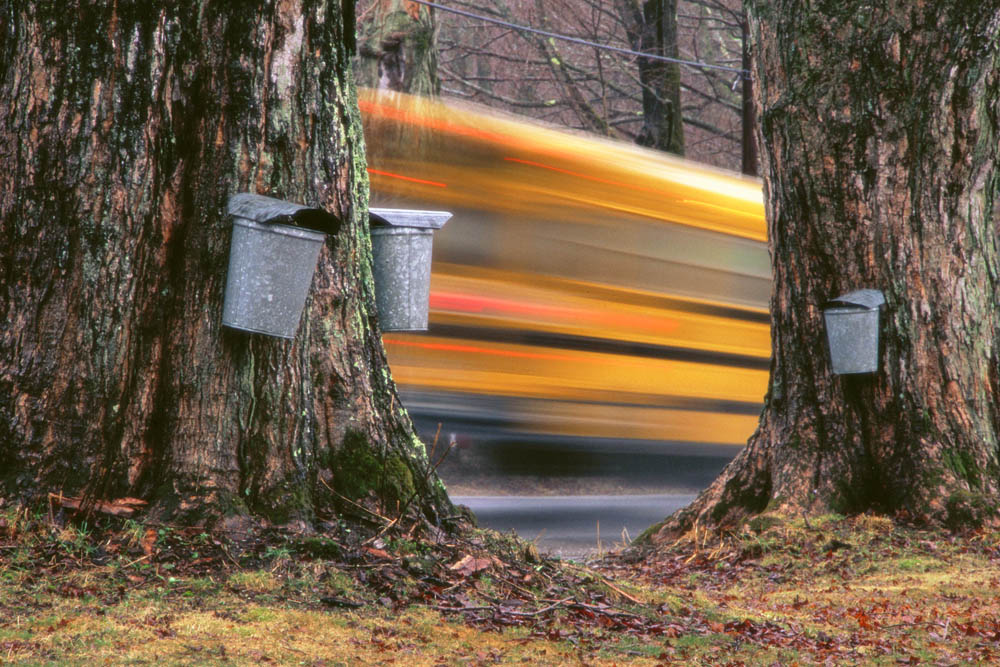
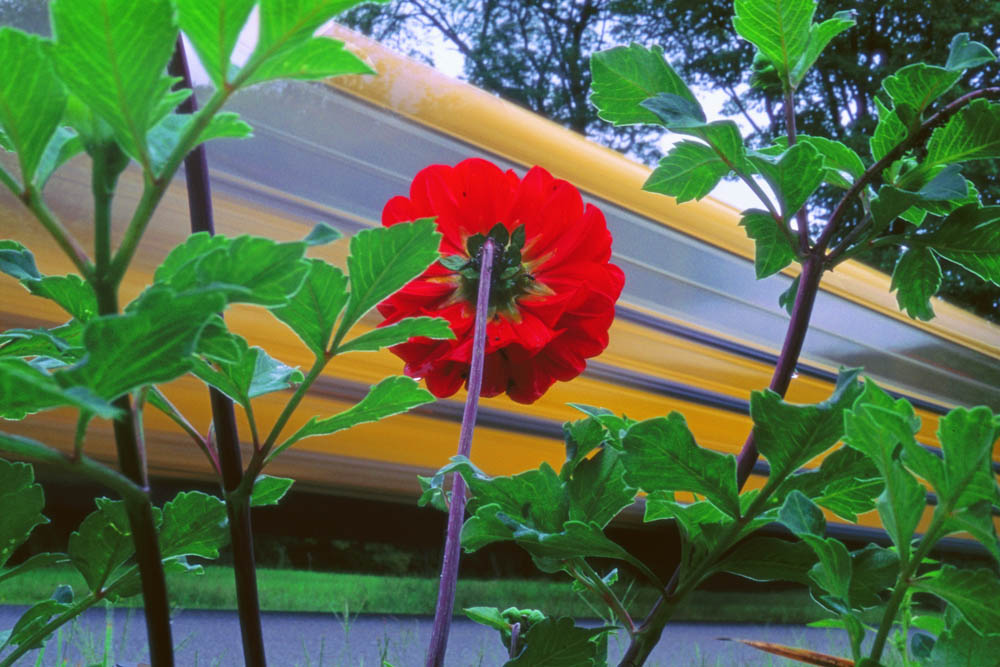
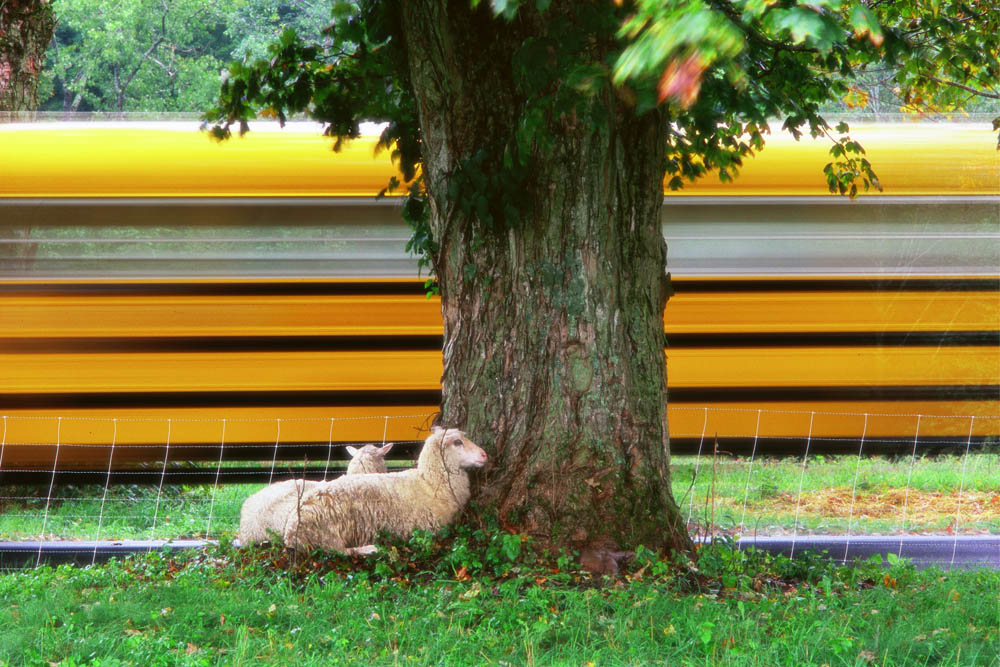 To celebrate the glorious transition of winter to spring, the Holyoke Community College Photography Department has invited Gregory Thorp to be a visiting artist on Wed. March 21st at 11:00 in the Media Arts Center in the HCC Campus Center Building. Gregory will give a presentation and critique students’ work.
Gregory Thorp is described in his most recent book, Rivers Run Past, as “America’s premier photographer of our inland waterways”. I don’t think Gregory will be showing his water work, but I did give him the go ahead to present whatever he wants. I am hoping that he will talk about the process of making great pictures while creating his many remarkable portfolios.
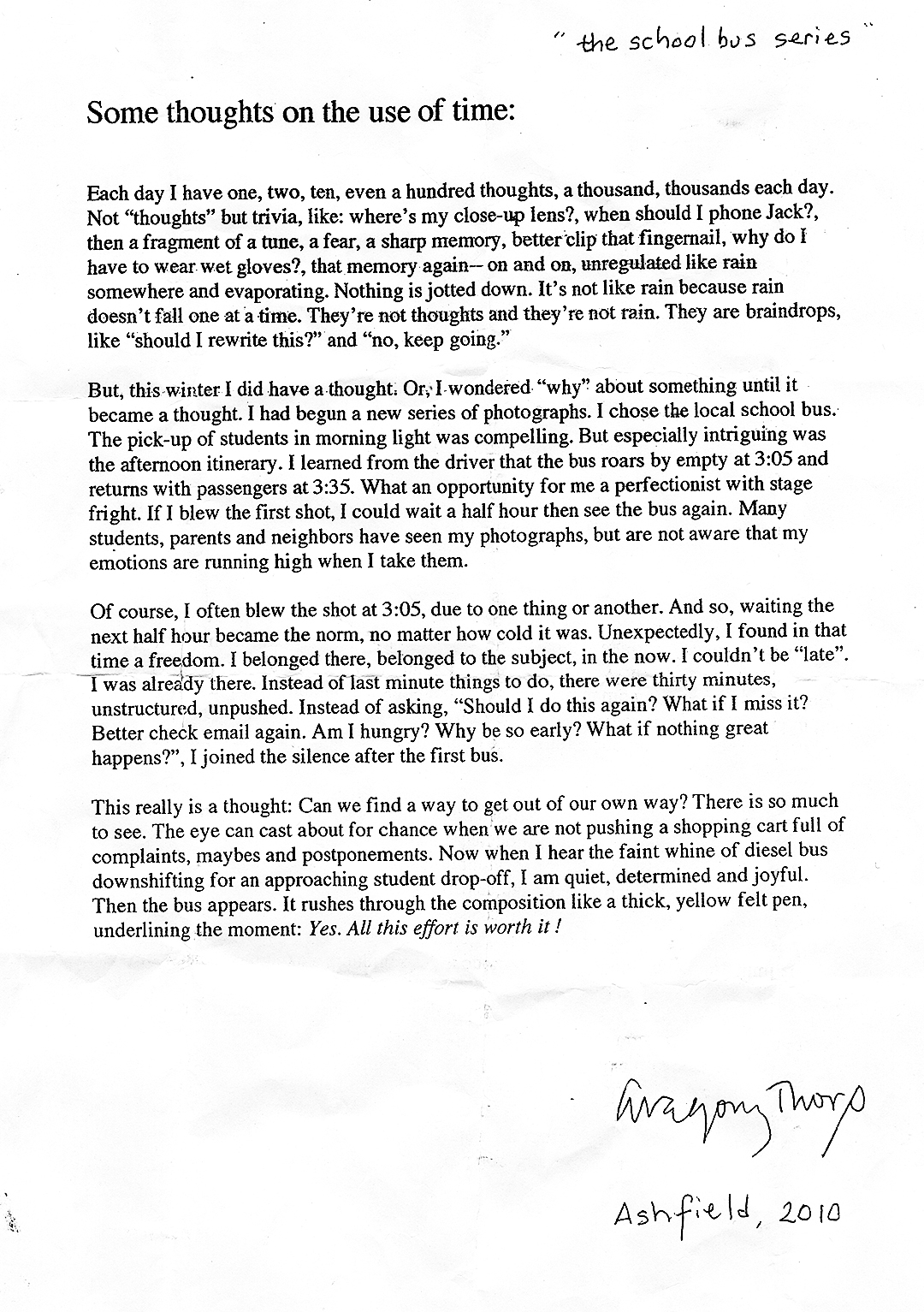
Here is a scan of Gregory’s artist statement for his most recent “school bus series”.
Foundations of Photographic Excellence
NASA Photo of South and North America
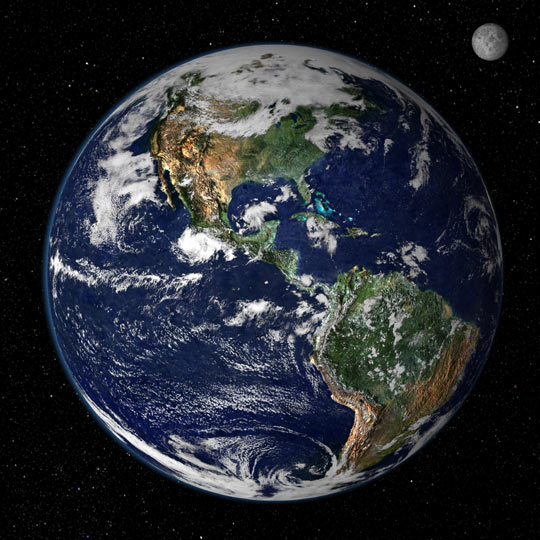
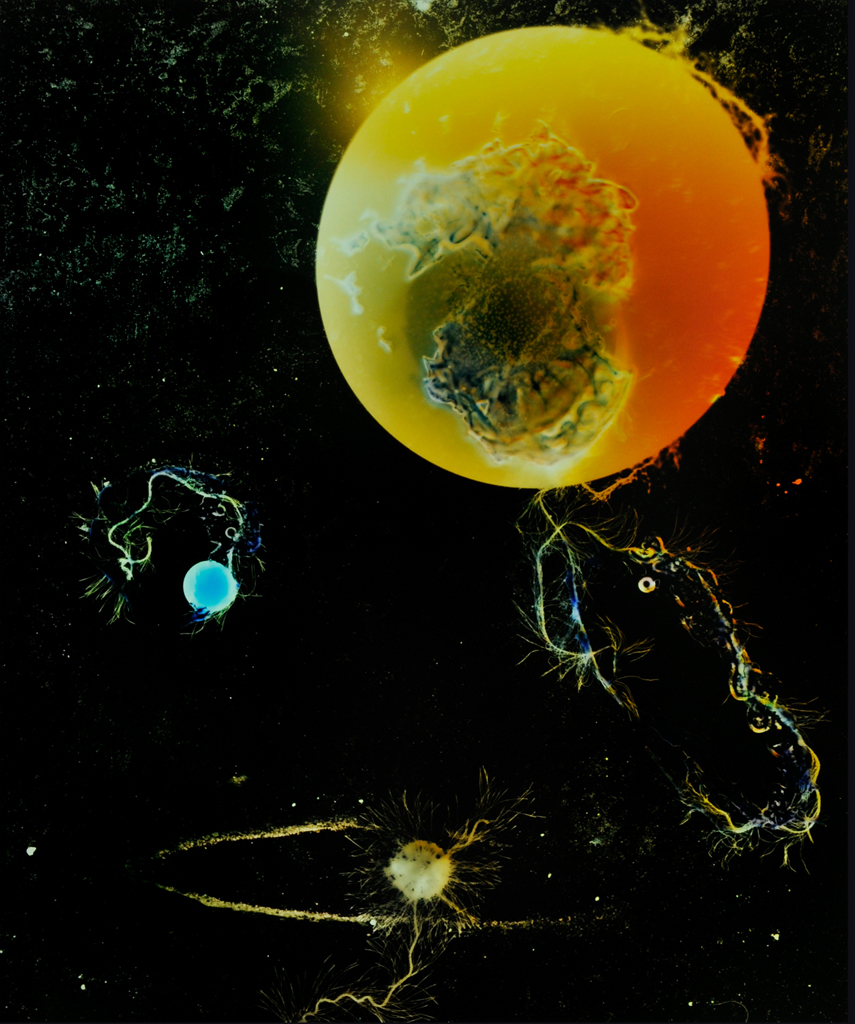
What makes a good photograph? The above NASA photo could qualify as a great photograph, but I’m thinking of a good picture made by a human being with photographically based tools, but not necessarily a satellite or a space shuttle. Megan Junell Riepenhoff comes to mind. She photographs the cosmos with barely a camera. In fact, her pictures are photograms created with the help of light sensitive materials, commonly found objects, a light source and only an occasional negative. For the picture below she used hair gel, sand, a balloon and a flashlight.
From the series Instar by Meghann Junell Riepenhoff
My first point is that a great picture should at least be as good as what is photographed. It could be better than being there. And it would most likely be a perspective that the viewer would not have conceived. In the case of Ms. Riepenhoff, being there may have inspired only questions from a casual observer.
See Meghann’s studio and read what she has to say here. Checkout her website here.
World Press Photo of the Year, 2011.
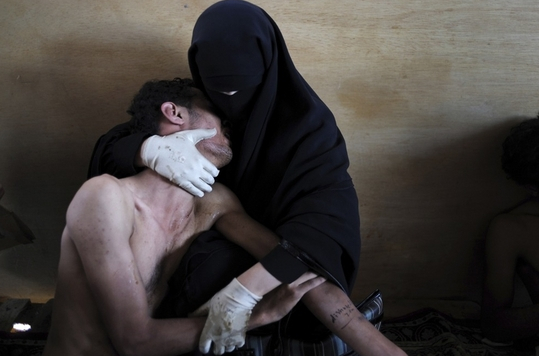
Samuel Aranda’s World Press Photo of the Year, 2011, does not need a caption to portray its power. That is because this image from Yemen relies on two millenia of Christian iconography to set the stage for interpretation. Joerg Colberg, over at Conscientious, has eloquently detailed his response to using a Christian symbol to illustrate Muslim suffering. That said, it is still a good picture and will most likely join the pantheon of historic depictions of “the Virgin Mary cradling the dead body of Jesus”. I just Googled “The Pieta” and Aranda’s photograph came up after the first page of paintings and sculpture.

The Sodoma Pieta, 1533
Back to my second point. A great picture will hold up without a caption or label. Without words, pictures become adventures in form and space. They are viewed purely on visual terms, even if those terms refer to 2000 years of art history.
Photojournalism and Conceptual Art may take exception to my no caption theory and I agree.

Untitled by Cindy Sherman, 2011
Next on my list for photographic excellence is to avoid gimmicky tools — make that “extremely” gimmicky tools.
Photoshop manipulation is getting more common in the art world. In Cindy Sherman’s newest work, at the Museum of Modern Art, she has digitally altered her face and placed her body in an Icelandic landscape. I’m not complaining. I like the picture.
Let us, at least, consider avoiding gimmicky “no-nos” as in fisheye lenses and starburst filters. There are so many tools available to photographers, use what works to fulfill your personal vision.
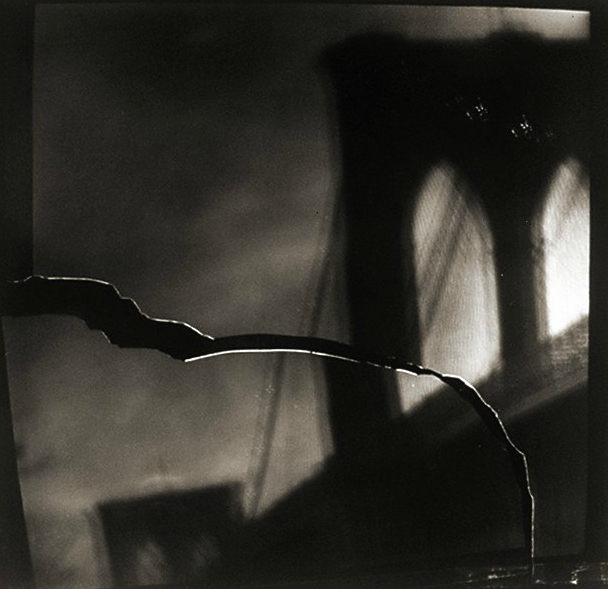
From Photographs of America by James Fee
Technical skills can be an indicator of excellence, but it is only one ingredient. James Fee had technical chops and he knew what to do with them. He would use vintage cameras and lenses and he did not hesitate to mutilate his film or stain his prints. He would work his images until his technical knowledge meshed with his creative intentions.
Mitch Dobrowner is more traditionally technical in his expression of excellence.
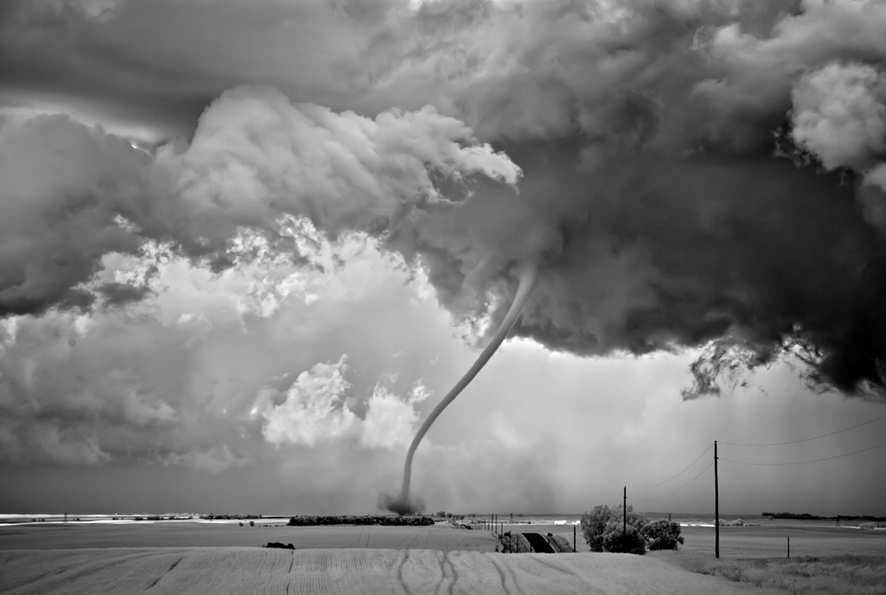
Rope Out: Regan, North Dakota by Mitch Dobrowner, 2011
Finally, I want to discuss the lottery factor. In the digital age, quality is, at times, thwarted by quantity. It is OK to shoot thousands of pictures, but make those attempts with vision in mind.

Contact Sheet from The Americans by Robert Frank
Robert Frank created one of the most influential photography books of the 20th century. The Americans, published in America in 1959, included 83 pictures edited from 27,000 negatives.
Below is the chosen picture from the above contact. See the recently published book of his contacts here.

From The Americans by Robert Frank
When Garry Winogrand died in 1984 he left behind almost 300,000 unedited images, including 2,500 rolls of undeveloped film, 6500 rolls of developed but not proofed film, plus about 3,000 additional contact sheets of unedited rolls of negatives. Winogrand did not like to edit his pictures while he could still remember taking them. He felt his personal memory of the experience could bias his choices.

Untitled (Fish), by Garry Winogrand, 1967
Robert Frank and Garry Winogrand were great practitioners of the 35mm camera. Winogrand would certainly be shooting digital if he was still around today. I’ll leave you with a Winogrand quote that wonderfully contradicts this post’s intention to outline some of the indicators for photographic excellence.
“I don’t have anything to say in any picture. My only interest in photography is to see what something looks like as a photograph. I have no preconceptions.”
Peer Group Show

NEW PHOTOGRAPHY BY ELLEN AUGARTEN, SARAH HOLBROOK, PETER KITCHELL, GREGORY THORP, AND FRANK WARD
PEER GROUP: 5 photographers who inspire each other
February 2-29, 2012
FORBES LIBRARY, HOSMER GALLERY
20 West St, Northampton, MA
Opening reception Saturday, Feb. 4th. 2-4:30
We are having this exhibition because we want to illustrate what happens when visually oriented people make the time to get together and let our pictures do the communicating. We have been doing just that for two years now, meeting about once a month to enjoy each others company and to think with our eyes. The selections from five individual portfolios on display in the Hosmer Gallery represent five facets of our group expression.
Who are we? First, the very innovative artist/photographer Peter Kitchell is the prime instigator for us getting together along with Sarah Holbrook. Sarah has a decades long career making great art from whatever photographic medium inspires her. Ellen Augarten, appreciated for her professional portrait, as well as fine art photography, brings her talent and good sense to the group. Seasoned professional photographer and artist, Gregory Thorp, was an early influence in my photography career. He continues to inspire us all. I am Frank Ward and I’ve been a picture professional, teaching and making photos, for about as long as everyone else in the group.
Here are bios and pictures from everyone in the group.

From the series, "Doubles" by Ellen Augarten
I have been picking up my camera for thirty years now in a professional capacity, but the last two years I have had the wonderful association with four other photographers in a peer photo group, and I credit them for helping me to see outside of my comfortable photo box. When your vision needs expanding, refinement, discussion, a fresh look and encouragement, there is nothing like sharing new work with colleagues.
The work in this exhibit is a large departure from the black and white portrait work I started my career doing. The images were taken with a Hasselblad XPAN in panoramic mode. I scan the slide film to create high resolution digital files which I use to make ink-jet prints. All of the images are double exposures made in the camera, which gives them some additional depth, interest, and confusion.
My latest accomplishment is getting Psalms in Ordinary Voices published with the Rev. Andrea Ayvazian.
Many thanks to the many photographers who have generously donated their old slide film to me. It has made this project affordable, possible and fun.
Ellen Augarten
Northampton, MA
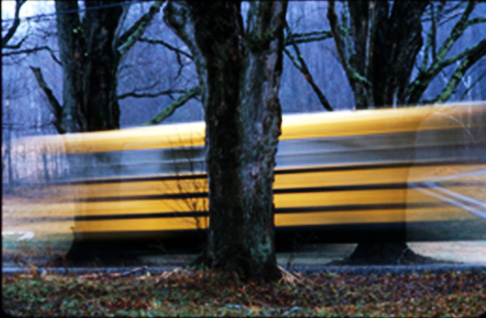
From the "School Bus" series by Gregory Thorp
Gregory Thorp, 65, is a photographer of musicians, the botany of corn, and the Mississippi River, but when he wants to experience trial and error and hope on a daily basis, he photographs the Ashfield school bus.
Gregory Thorp
Ashfield, MA
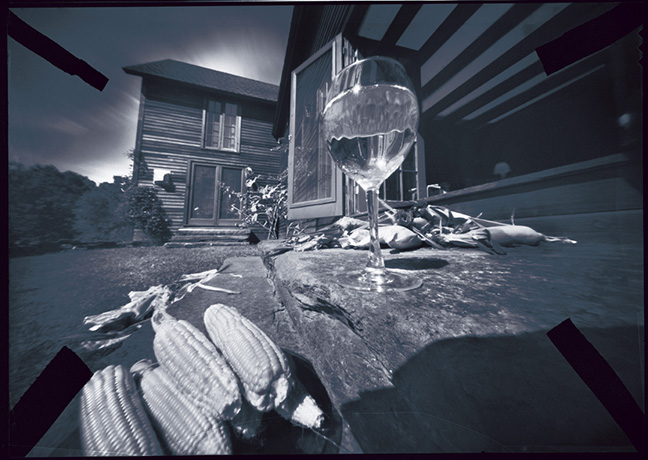
Corn, Wine, Husks by Sara Holbrook
After receiving a BA in Philosophy, I moved to New York City where I worked in photography and film production. In the late ‘90’s I began to build my own cameras and worked exclusively with pinhole negatives for several years.
There is a different look to pinhole photographs due to the length of exposure time, the way light moves inside the hand-built camera and due also to the invitation to fate to enter in. I find, even with my digital cameras, I am now searching for a more expressionistic look, and realize all my work has become influenced by the pinholes.
Sarah Holbrook
Ashfield, MA

"Palmetto and Pine" by Peter Kitchell
More than 40 years of bouncing back and forth between painting, sculpture, design and photography have defined the kind of work I do more than anything else. It is the combination of these skills that has suggested the materials and scale of my work.
A few times a year I travel to photograph, and put together an in depth meditation on a place that has had a romantic draw for me. I have focused on architecturally specific commissions since the beginning. I love how this has allowed me to pursue larger and more complex jobs, often bringing in other craftspeople and designers with complimentary skills.
Peter Kitchell
Ashfield, MA

Dacha, Siberia, 2010, Frank Ward
Forty two years ago my video professor at the University of Massachusetts offered me a summer job making slide shows. I asked for an advance to buy a camera and became a professional. Soon after that I met an Italian philanthropist who sponsored me for a year while I created slide shows in Asia. My mother is still amazed that I am a successful photographer and professor. In 2011, after about a dozen years of applications, I received the prestigious Mass Cultural Council Artist Fellowship. This grant is a demonstration that achievement is not just a matter of luck; it takes persistence too. Most recently, my photography and travels have developed into a Cultural Envoy position with the US Department of State. This summer, I will be leading photography programs through our embassies in Central Asia
Frank Ward,
Ashfield, MA
Expanding Visions
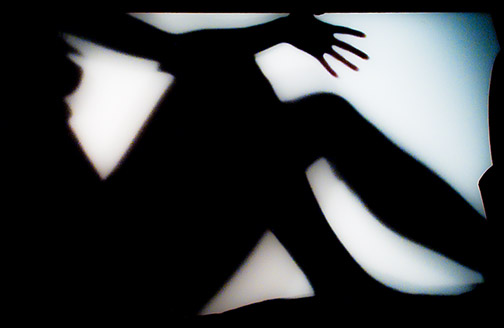
Jericha plus plexiglass. All pictures Frank Ward 2011.
All three of my classes worked with the talented and skillful Jericha this week. She has a strong background in art making, art history and dance. Check out her thoughtful blog, Splitting the Light.

After Julia Margaret Cameron.
I’m uploading my pictures from the sessions because next week is the last week of classes and I probably will not have a chance to feature student work. I’m hoping their work will be ready for the final crit. I spend most of the studio session adjusting cameras, lights and action. The studio is a new environment for most students and it takes awhile for them to get their settings tweaked.
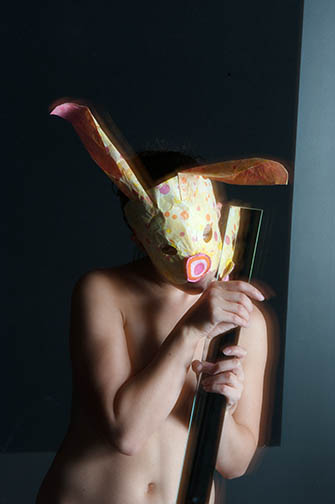
Cynthia's rabbit mask.
I ask students to bring their own props. That is a big part of the fun.

Slide projection.
Jericha works with us doing portrait, fashion and figure. My favorite work is with projections. We take either a digital or slide projector and have the very improvisational Jericha interact with the screen.
The combination of studio and model is key to transitioning students from taking pictures to making pictures. I like it when their “directorial” mode kicks in and they see the potential in adjusting the situation rather than simply recording what is offered.
Photography School Why?

by Michael Lafleur
Last week, I read a Duckrabbit blog post called “Are Photography Degrees the Joker in the Pack?” It got me thinking about the art career conundrum. A joker is a valuable card if all the players agree that it is the “wild card”. Otherwise, it simply isn’t dealt. It seems that the art world is stacked with jokers with art degrees. Every artist needs something on a resume. What is often overlooked in the art school scramble is the real reason to go. Sure, a degree helps you get a job teaching and may get your foot in the door of some classy gallery, but the real motivation has to come from within.

by Joe Bordeau
Joe Bordeau just became a photography major. He has a visceral approach to making photographs, and he has a great feeling for what his visual universe looks like. He hasn’t made a great picture as much as he has made several strong groups of pictures. I think that portfolio consistency easily outweighs a couple of great photos in a mixed bag of snaps.
What art school really offers is the opportunity to make art, to show art, to eat art, and so on. It can be total immersion. I’m thinking about Michael Lafleur, top. He is currently one of HCC’s promising fine art photography students. And he is doing what everyone should be doing in art school– making art, showing art, eating art…
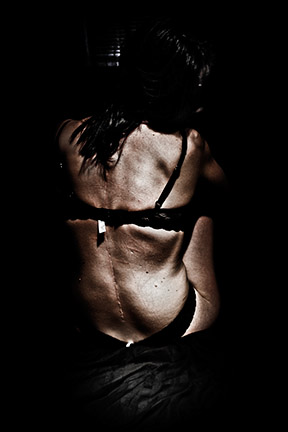
by Patrick Harris
Patrick Harris is also making art like an obsessed art student. He throws all kinds of pictures at the wall and a lot of them stick. The pictures say something.
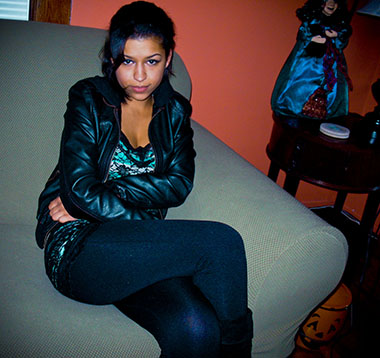
by Gretchen Drane

by Ciera Bilodeau-Cox
Gretchen Drane and Ciera Bilodeau-Cox approach art-making as a by-product of life-living. Their work comes right out of the Nan Goldin school of photography although I don’t remember if I showed them Nan Goldin’s work.
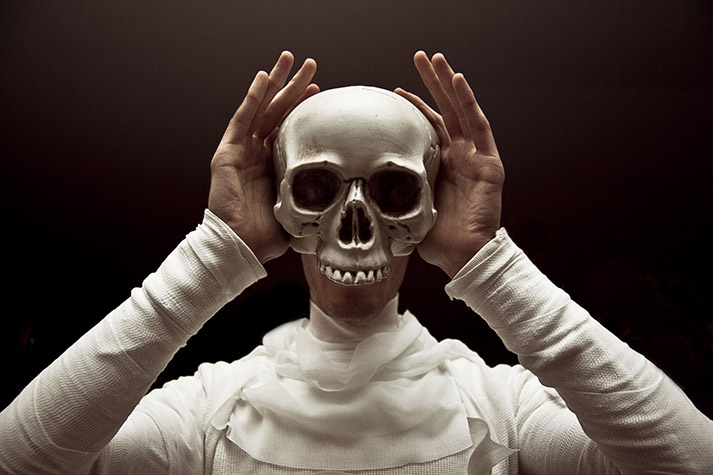
by Corrin Halford
During the first week of classes I usually ask students to talk about influences or photographers that inspire them. Ciera cited her friend, Corrin Halford, from a different section of my digital photography classes. Corrin is versatile and talented. That is a great combination for success for the working photographer.
I started this post thinking about why students should go to photography school. I think that every photography student should take a few courses. If fine art is what you want to make, then stay in art school. That is the place to get your vision together. If you are oriented toward photojournalism or some area of commercial photography, and those fields need vision too, you have to consider how much self-confidence you have. You need a lot of energy and stamina to make it on your own. Stay in school to build your portfolio, but jump into any photography situation you can find. The real learning takes place in the field or studio. Photography school is like a trampoline. Use it to bounce higher and higher until you can touch your dream.
Modes of Expression

Cherry Blue Ice by Hannah Macpherson
We are just about finished with mid-terms in my two classes of Introduction to Digital Fine Art Photography. There are stacks of beautiful pictures. The above image is from Hannah Macpherson’s series of multiple exposures. When we critiqued her project we talked about Lorie Novak who makes similar work. Hannah was unaware of her.

From the series-Thin Skinned, 2004-2006 by Lorie Novak
Back to student portfolios, Corrin Halford’s Trisha (below) indulges my love of people pictures.

Trisha by Corrin Halford
I encourage students to photograph indoors. From my perspective interior pictures can be more revealing of the photographer, as well as what or who is photographed. The incursion into the subject’s private space is part of getting personal about picture making.

by Cynthia Consentino
Cynthia Consentino is an accomplished sculptor. It is a pleasure to have her expressive and woozy work as part of the class.

by Michael Lafleur
Michael Lafleur is influenced by William Eggleston. I like that Mike acknowledges his influence without actually taking pictures like Eggleston. See Eggleston via Google for an incredible array of pictures that look as fresh today as they did 30 years ago.
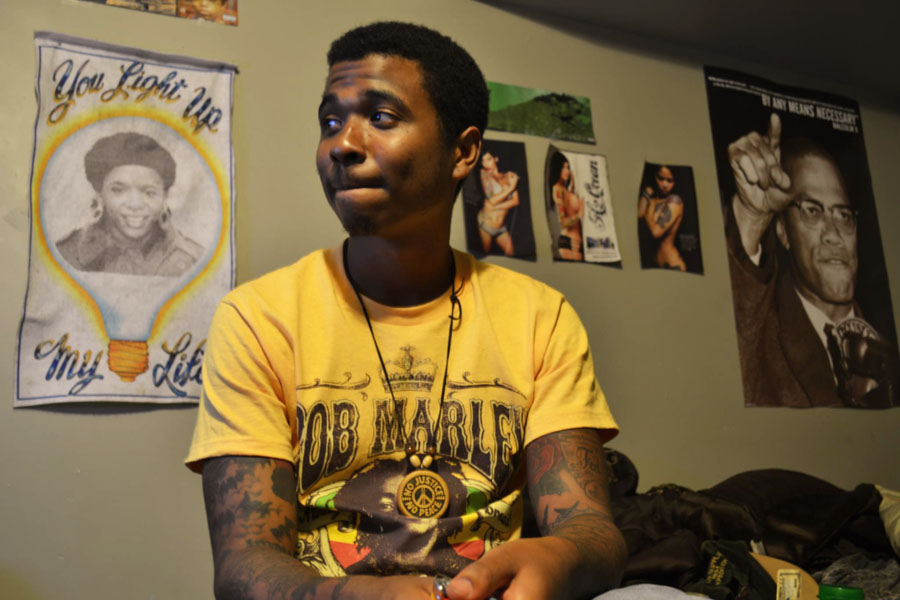
by Gary Thibault
Gary Thibault photographs friends in their rooms and Gretchen Drane photographs friends in their cars.

by Gretchen Drane
The following three pictures illustrate the more theatrical side of expression.
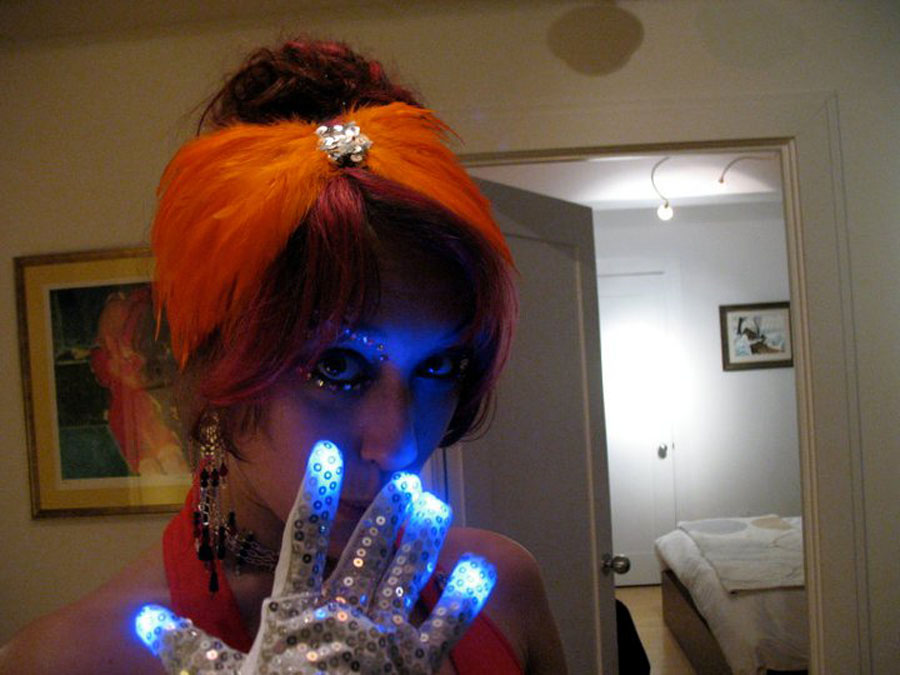
by Leah Avalos
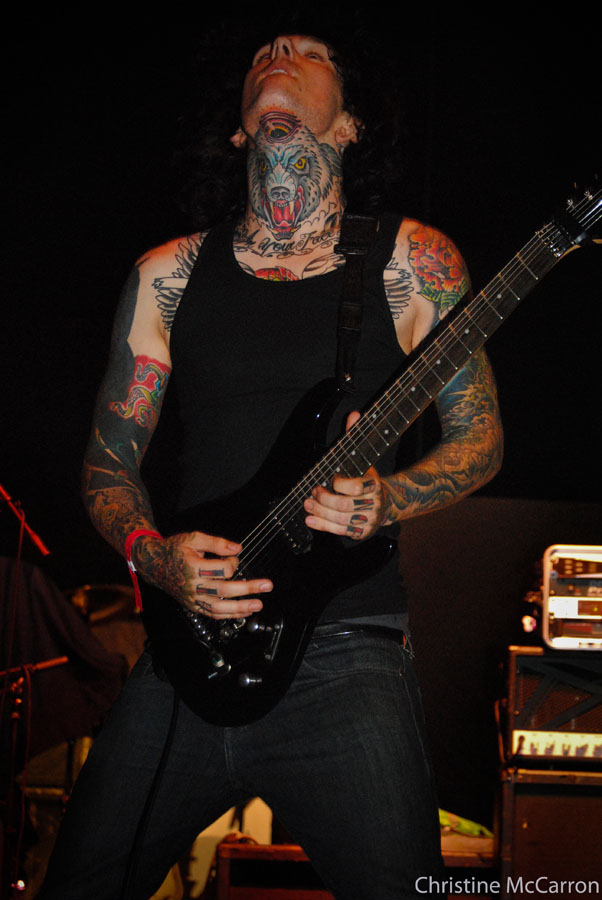
Photo by Christine McCarron

Glow by Patrick Harris
Just so you don’t think all my students make portraits, below is a striking non-portrait from Texas by Ashley Graziadei.
 by Ashley Graziadei
What got me thinking about modes of expression is a quote from Denis Donoghue’s review of The Letters of Samuel Beckett Volume II: 1941-1956 that was in the New York Times Sunday Book Review:
(Beckett) claimed to favor “the expression that there is nothing to express, nothing with which to express, nothing from which to express, no power to express, no desire to express, together with the obligation to express.”
The above quote makes a lot of sense coming from the author of Waiting for Godot. It also has a superficial kinship with Buddhism’s Heart Sutra:
“form does not differ from emptiness
emptiness does not differ from form
that which is form is emptiness, that which
is emptiness form, these same is true of
feelings, perceptions, impulses, consciousness…”

by Will Brock
I just wrote a long paragraph about Beckett’s “nothing” of expression and the unconditioned, choiceless awareness that is the heart of The Heart Sutra. Then I deleted it. As students of visual art our mode of expression is through pictures not words. Our obligation is to express. Our freedom is to embrace the known and the unknown. I told my students last week that when the shit hits the fan, see the beauty in the flying debris. As in the minimalist works of Samuel Beckett, the simplest pieces add up to an all encompassing whole.

Brussels Sprouts by Ahmad Taheri
I like Ahmad Taheri’s picture of Brussels sprouts. Our crop of sprouts failed this year so Ahmad’s photograph is a stand-in for what has been my favorite vegetable. It could be said that making art is like making food. Make what you enjoy and consume what you enjoy.
Photo Presentations in Uzbekistan and Turkmenistan

 I am so pleased to be able to upload pictures from Central Asia after three weeks of blocked blogs. It is now my final week in Ashgabat, Turkmenistan. It is amazing here, although I’m not sure I’ve been able to catch my amazement photographically. I will say that the cliches seem appropriate. For example, Ashgabat as a cross between Las Vegas, Nevada and Pyongyang, North Korea. Or, from my more optimistic perspective, Disney World and the Washington, DC Mall. Regardless of first impressions, I’ve learned from three consecutive years of visiting Tashkent, Uzbekistan that Central Asian cities get better as I get beyond their curiously inhospitable architectural posturing and get to know the people who breathe life into their vast expanses of concrete and marble.
Jerome Liebling: 1924-2011
Stan Sherer sent me this obituary of Jerry Liebling. We consider him the man responsible for creating a photography community here in the Western Mass. hills.
Jerry was my bucket of cold water. I would show him my newest work and, if there was the slightest lack in my pictures, he would throw that bucket of water in my face. He was my wake-up call. You didn’t get a pulled punch from Jerry.
I am posting from abroad and the server won’t let me upload any pictures. I’ll work on improving this situation later.
Below is an excerpt of the Hampshire College obituary.
In Memoriam: Jerome Liebling
April 16, 1924 – July 27, 2011
The Hampshire College community mourns the loss of Professor Emeritus Jerome Liebling, who died Wednesday at Cooley Dickinson Hospital in Northampton, Massachusetts.
Professor Leibling founded Hampshire College’s film, photography, and video program. He was already a photographer and filmmaker of international renown when he came to Hampshire from the University of Minnesota in 1969, before the College had even opened its doors.
He remained at Hampshire until his retirement in 1990, with a leave in academic year 1976-77 to serve as Yale University’s First Walker Evans Visiting Professor of Photography.
Images by Jerome Liebling tell a distinctly American story. He created intimate and deeply honest portraits, capturing the dignity of ordinary people living their lives. He documented both the urban and the rural landscape, remaining true both to the subject and to his artistic vision.
His former students, many of whom have gone on to be among the nation’s leading filmmakers and photographers, have praised Liebling for his humanity, intelligence, and perception as well as the power of his influence on their work. Ken Burns has said that his mentor’s “thumbprint is suffused on every frame” of his films.
“With Jerry’s death, the world has lost a gifted photographer and filmmaker, and Hampshire College has lost a beloved teacher, mentor, friend, and colleague,” said Sigmund Roos, chair of the College’s board of trustees. “He had a profound impact on Hampshire, and on the education of a whole generation of filmmakers. This is a personal loss for me and many others at the College. I will miss him dearly.”
“Jerome Liebling and his camera saw into the souls of America. He is irreplaceable. We all mourn his personal and professional loss,” said Alan Goodman, vice president of academic affairs and dean of faculty.
Leibling’s work is in the permanent collections of major museums throughout the world. His photographs have been exhibited at the Museum of Modern Art, the Getty Museum, the Boston Museum of Fine Arts, and many other museums and galleries. He received two Guggenheim Fellowships and had many monographs of his work published. Among his many awards and honors was first prize in the 1993 New England Film Festival for Fast Eddie and the Boys, a film he produced with two former students, Hampshire graduates Roger Sherman and Buddy Squires.
A Luce Scholarship Winner and a 2011 MCC Artist Fellow
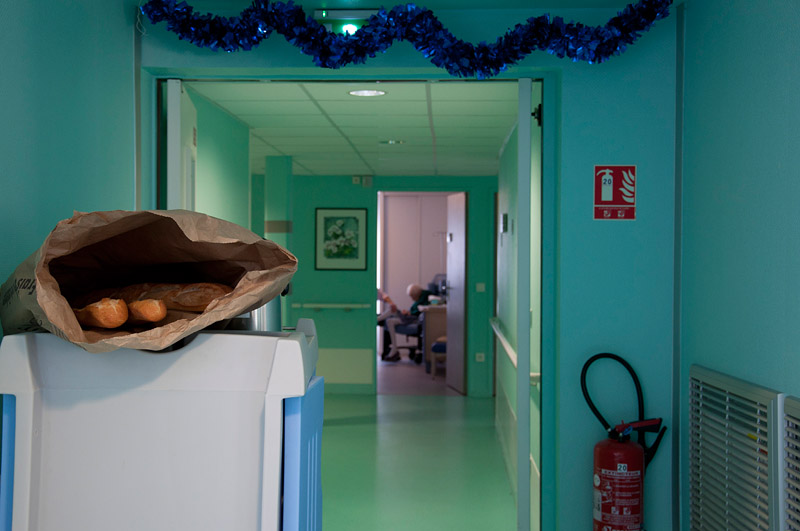
Bessie Young photographs the lives of senior citizens.
Bessie Young is a 2011 graduate of Amherst College. Beginning with a course on The Psychology of Aging her freshman year, Bessie has been working with the “old people” of Amherst, MA. When I saw Bessie’s pictures, first online and later in exhibition, I was wowed by her fresh view. Almost every semester at HCC, I have a student who works with old people, or photographs a grandparent, or simply does portraits of elderly friends. My students have often made beautiful renderings and heart wrenching illustrations of the world of the elderly. Bessie’s pictures see that world through the eyes of the aged.

Bessie Young brings her camera and her heart into the world of the elderly.
I want to congratulate Bessie for getting a Henry Luce Foundation Scholarship Award to continue her work in Japan for the 2011-2012 school year.

Tultsi, Siberia, 2010, by Frank Ward
Last week I was selected as a 2011 Massachusetts Cultural Council Artist Fellow. I have applied a dozen times over the years for this $7500 award bestowed upon Massachusetts photographers biannually. It is one of the few awards that have no entry fee and no strings attached. It is simply a recognition of work that the artist has created. I applied two years ago with work from the same series, my ongoing project photographing in the Former Soviet Union (FSU). I believe my good fortune this time round was in the editing. Applicants submit 5 numbered image files that are shown to the judges side-by-side on one screen. For years, I had sent what I thought were my five best pictures from whatever project I was working on at the time. This year I decided to consider my submission as one picture composed of 5 independent photographs from the past 3 years. I spent a lot of time comparing and contrasting hundreds of files deciding which combination adds up to more than the 5 chosen photographs.
Previously, I would compose a picture based on several compositional highlights. This is something I picked up from the work of Garry Winogrand, and the Italian Renaissance (where Garry’s influences originated).

Central Park, 1970 by Garry Winogrand

Giotto, 14 Century, Early Renaissance
You can see in the composition of both Winogrand’s 20th century and Giotto’s 14th century art that the structure is basically the same. Both present an assembly of people in the foreground that can be divided into smaller groupings of individual compositional importance, and a secondary ensemble in the background, or sky, that represent angels or other bystanders. The above two pictures illustrate the additive way that I have often structured photographs since Ben Lifson opened my eyes to the Renaissance and street photography during the MFA program at Bard College. Here is an example that can be viewed as a homage to Lifson and Winogrand .

Students, Tajikistan, 2009, by Frank Ward
In the past few years, I have been working with a subtractive approach to making pictures. See Tultsi above and Ice Fishing below.
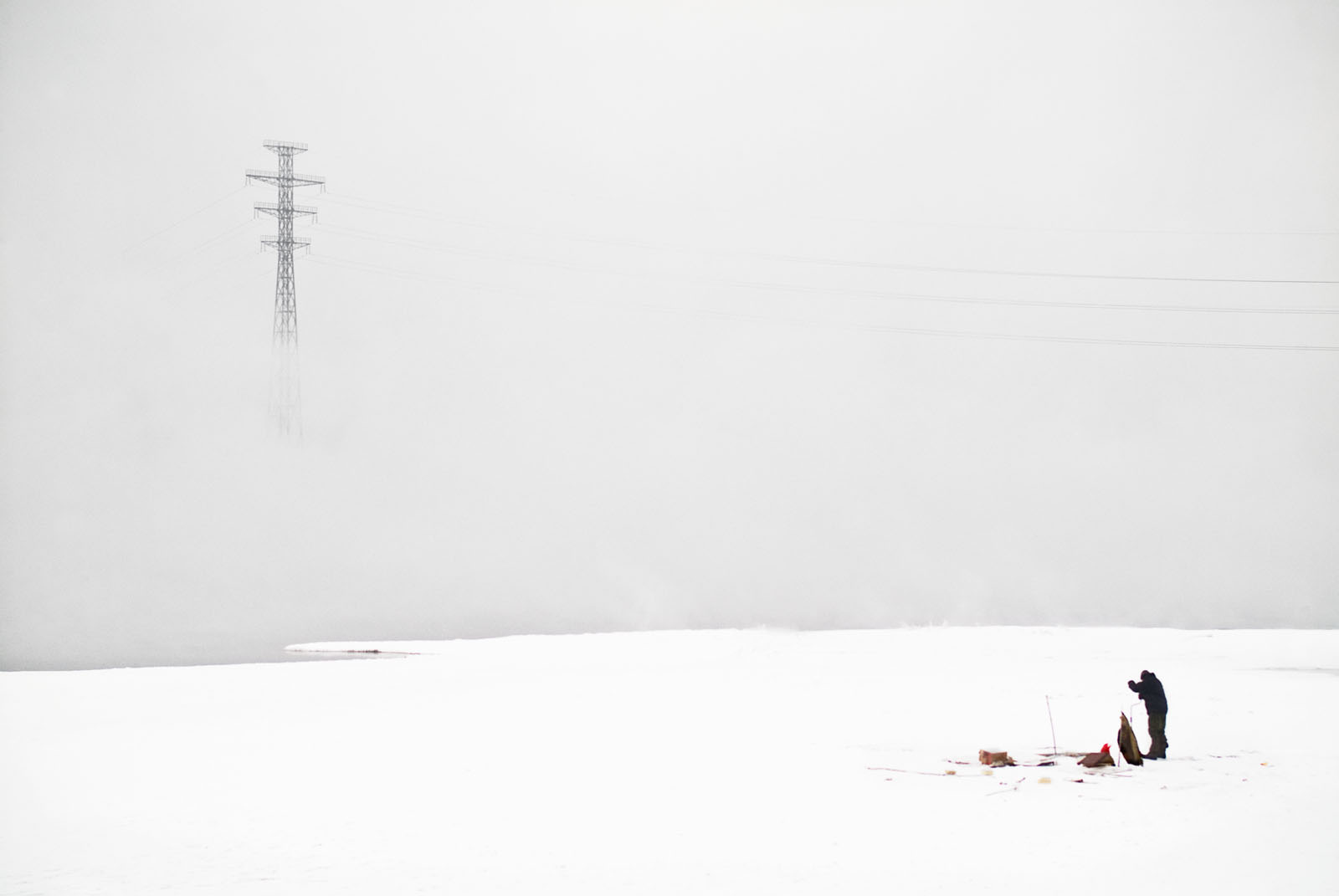
Ice Fishing, Siberia, 2008, by Frank Ward
So much for Renaissance influence. The Renaissance is not known for its minimalism. It is known for filling the potential spaciousness of sky with as many angels as possible. For the MCC Artist Fellowship application, I incorporated emptiness, color, composition and line to suggest one panoramic composition balanced by a fulcrum.

Five pictures from the FSU by Frank Ward
Bloggo-fear

The Social, 2011, by Gabriela Herman
I got blogged-out last month and skipped a post for April. There is so much blogging, tweeting and Facebooking going on that I just couldn’t bring myself to add to the torrent. Gabriela Herman just uploaded a portfolio of blogger portraits to PhotoEye Galleries. These computer lit views represent the reality of internet life. Social networking as contemporary contact.
I’ve been sitting around reading The New Yorker, roasting coffee beans and renovating the apartment in our house. I’m not really doing much work. I watch Rigden and Janelle sand and paint.

Rigden and Janelle, May 4, 2011
Janelle has made better pictures on her cell phone than my portrait of them (above). More about cell phone cameras below.

Portrait by Gustavo Romero, 2011
This is also the last week of classes. My student Gustavo is legally blind and makes the most powerful portraits of his friends and family.

From Family Portraits by Gustavo Romero, 2011
I did want to remind people about the approaching deadline for the SocialDocumentary.net Call for Entries.
 The life after 9/11 subject matter is both challenging and inherent in every picture we now make.

by Hin Chua
A good example of the all-pervasiveness of our post 9/11 world are the pictures in Hin Chua’s series After the Fall. This is a link from the NYT Lens blog. It’s funny that they make a fuss about how the photographs were made on a medium format camera. Photography is changing, but it is still true that much of the world’s “fine art” photography is being done on film with cameras bigger than 35mm. The reality of this is that the rest of us are using digital. My student Gustavo uses a small point and shoot. I’m using my iPhone.

Fuzzy-eyed river view by Frank Ward, 2011
Much to my personal embarrassment, I seem to be influenced by the romantic grip of my iPhone camera. There are about 1000 apps that make one’s photography look like it was made a century ago. Here is a recent NYT report on the best camera apps for iPhone.
After two and a half years of participating in the blogosphere, bloggo-fear is striking me. I’m not clear about whether it has something to do with the “it’s all about me” blogging process or if it is about something bigger. To paraphrase a concept from John Szarkowski‘s days as Photography Curator at the Museum of Modern Art, a photograph is either a mirror or a window. This is an idea he put forth in support of a 1978 show called Mirrors and Windows. The concept seems insufficient for the current century. I’m going to think about it in relationship to digital practice and get back to you.
Bad Photography Student

Casta Diva by Emanuele Cremaschi-Beauty Pageants in Italy, 2010
If anyone is feeling like a bad photo student, I thought I’d make some suggestions for becoming better. I want my photo students, even the currently and previously questionable ones, to become photographers. There are lots of historically sound suggestions for improving your photography, such as, “F-8 and be there” and “get a good pair of shoes.” Yet, before you even adjust your F-stop, you have to have an impulse. The attraction toward photography does not have to be a clear “why, what and where.” It just has to be a feeling beyond thinking that photography is easy and fun.

Kirkpinar by Pari Dukovic
Kirkpinar, in Turkey, is the longest sanctioned sporting event in the world.
Successful students have a more subtle intention than simply declaring, “I wanna be a photographer.” If you feel the pull or push to make pictures, or even just like to walk with your camera, that’s a start. There is another aspect, which is based on your interest in pictures that are not yours. Do you take the time to look at portfolios on line, other than Facebook? I’m talking about an interest in art in general, not simply photographs of fashion, friends and rock and roll.
Now for the question your family asks. “What are potential careers in photography?” I found a website that lists job postings for photographers. At present it seems to be mostly New York area opportunities, but I did not check listings prior to this week.

#1 from What Remains by Justine Reyes
Recently, PDN released its selection of 30 under 30; their choice of new and emerging photographers. Both Justine Reyes (above) and Pari Dukovic (further above and below) are on the list. Justine has some clear writing on her site about her motivations for making pictures.

From Venues of Immortality by Pari Dukovic
I am primarily interested in Dukovic’s work because of his use of grain and high contrast. The above picture, photographed in New York City, has the gritty, in-your-face realism of riding a NYC subway. Both Dukovic and Reyes have a personal vision and the ability to translate that into coherent personal projects.

Nicole, Brooklyn, NY, 2010 by Wenjie Yang
Over at the Verve Photo blog, Geoffrey Hiller introduces us to a “New Breed of Documentary Photographer” via a couple of posts a week. Wenjie Yang was featured a couple of weeks ago. I am really impressed by Hiller and other bloggers who have the energy to blog regularly. You may have noticed that I am sinking down to about one posting a month.

Via Pan Am by Kadir van Lohuizen
Emphas.is offers photojournalists the opportunity to “crowd fund” their documentary projects through viewer support. Yes, the online viewer decides what s/he wants to support by sending in as little as $10 toward a project’s realization. If a project gets enough backing, the photographer is off and making it work. For instance, Kadir van Lohuizen’s Via Pan Am is a 40 week journey from the southern tip of South America to Alaska documenting migration in the 15 countries of the Americas. So far, he has raised over $2000 toward that goal.
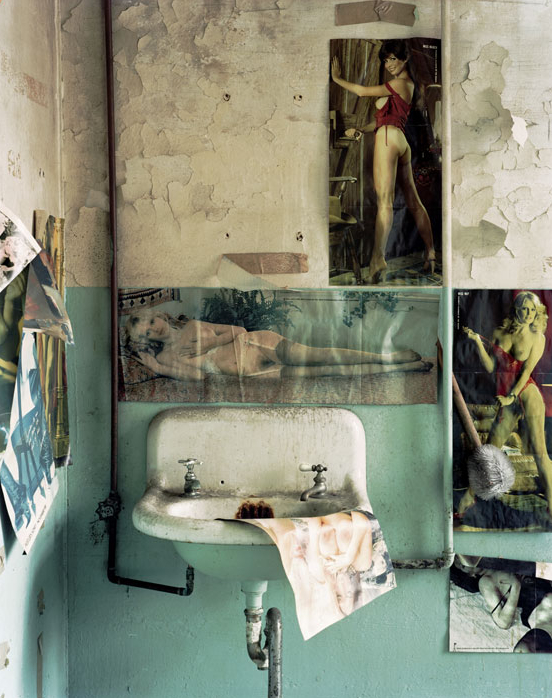
Photograph by Leah Mae Dyjak

Anyway, back to the “Bad Student” concept. Leah Dyjak reintroduced herself to me a couple of years ago saying she was one of my “bad students” from a few years before, but she finally “got it” and now is an exhibiting photographer. I saw her work and it is fabulous. She and a few other “bad students” taught me that planting the photography seed is enough. So, if you don’t feel the “fire in the belly” for photography, just wait a minute, or a year, or until you are ready. Photography, or any art, can be a tool for resurrection and affirmation. Whatever you learn and create in your early years of photography will get deposited in the library of your personal creative output to become a positive part of the story of your life.
 The Coruscating Camera