Photo Ephemera
Here’s a new blog that is about the odds and ends of photographic history. How about Ansel Adams selling hand printed Christmas cards by the box?
There’s more on Photo Ephemera

MoMA 1946
.
powerHouse Open House
One friend of mine calls this a “coming clean of how they do business”. Selling book deals to talented photographers has been the way of photography book publishers for years. I’m pleased to see that powerHouse is offering a model for even smaller scale book runs. Photo book publishers normally print less than a few thousand copies of any title. Now, for a few thousand dollars less than what was previously charged, almost any photographer has the opportunity to be published by this new powerHouse imprint. I think I’ll try Blurb first.
powerHouse Books is pleased to announce the launch of
PCP
An Innovative Approach
to Custom Publishing
New York, February 6, 2009—
powerHouse Books announces the launch of PCP (powerHouse Custom Publishing) a new book imprint combining the high-quality aesthetics and innovative marketing for which powerHouse Books is best known, with high quality print-on-demand services.
PCP will offer aspiring artists, photographers, and storytellers of all kinds the opportunity to create, publish, share, and ultimately market professional-quality illustrated books with a personalized professional approach to editorial, design, and marketing publishing services.
As an added benefit, all PCP projects will be reviewed by powerHouse Books for consideration to be published under the pH imprint with the potential for mainstream trade distribution.
PCP service packages include the trademark powerHouse Books approach in sequence, editing and design as well as high quality manufacturing:
Creative Services
Basic Edit and Design: $950
Submit up to 100 pages of content for a 50-70-page book and PDF.
Advanced Edit and Design: $1,750
Submit up to 200 pages of content for a 80-100 page book and PDF; pH to provide up to two rounds of revisions.
Additional Pages (Edit and Design): $250
Billed in increments of 10 pages (supply up to 20 additional pages of content per additional page order).
Additional Revisions (Edit and Design): $95/hour
Billed by the hour in 30-minute increments.
Color Management and Retouching: $95/hour
Billed by the hour in 30-minute increments.
Production Services
All books are hardcover, printed in full color throughout, include a printed and laminated dust jacket, and bound in natural cloth with a foil stamp on the front cover and spine. In lieu of a jacket, you may opt instead to have a color photo tipped directly onto the cover for no added cost.
BASIC: 50 pages, maximum 10 inches tall x 8.5 inches wide
• 50 copies $3,150 + $950 for design
• 100 copies $4,600 + $950 for design
• 300 copies $12,750 + $950 for design
BASIC +: 100 pages, maximum 10 inches tall x 8.5 inches wide
• 50 copies $3,500 + $1,750 for design
• 100 copies $5,250 + $1,750 for design
• 300 copies $13,900 + $1,750 for design
DELUXE: 50 pages, maximum 10 inches tall x 12 inches wide
• 50 copies: $4,000 + $950 for design
• 100 copies: $6,150 + $950 for design
• 300 copies: $16,500 + $950 for design
DELUXE +: 100 pages, maximum 10 inches tall x 12 inches wide
• 50 copies $4,500 + $1,750 for design
• 100 copies: $7,125 + $1,750 for design
• 300 copies $19,875 + $1,750 for design
Please note that the above are estimates. All jobs are quoted individually based on precise size, page
count, and other variables such as cloth color availability.
Additional services
Marketing: $1,500
• Description and categorization of project
• Email blast announcement to PCP subscribers
• Availability via PCP bookstore
• Availability via Amazon.com
Workshops: $500 – $950
• Design
• Marketing
• Editing and Sequence
Exhibition at The powerHouse Arena, Brooklyn
Please contact us to discuss details.
Book Launch Reception at The powerHouse Arena, Brooklyn
Please contact us to discuss details.
For more information, please contact
Craig Cohen, PCP Director
powerHouse Arena, 37 Main Street, Brooklyn, NY 11201
Tel: 212-604-9074 x113, Fax: 212-366-5247, email: craig@powerHouseBooks.com
Chic Banal
I was thinking about 21st Century photography this morning when my daughter Tobey started telling me about “chic banal” in fashion. My coruscating mind realized that “chic banal” was also dominating contemporary photography. Chic banal represents those pictures of suburbia, Americana, and/or the affluent lifestyle gone slightly askew, as pioneered by Gregory Crewdson (BTW, Check out this Aperture link). It is also meticulously documented in those precious moments of the affluent photographer’s perfect life, as initiated by Tina Barney.

Tina Barney (above) and Crewdson certainly represent the best of this trend initiated in the late 1970s. Artists who are having fun with their immediate world ,circa 2009, include Amy Stein.
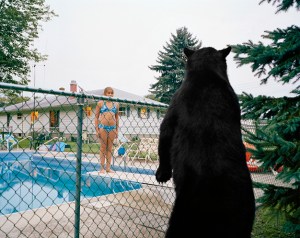 Amy Stein
She actually takes off on a 1980s concept by Barbara Norfleet.
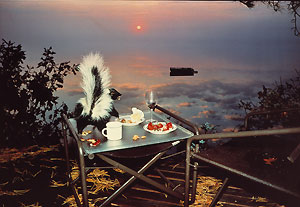
Barbara Norfleet
Graham Miller also merges the film set with suburbia and/or the city.
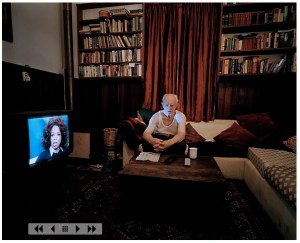
Graham Miller
Miller is spring boarding his ideas from Philip-Lorca diCorcia.
 Philip-Lorca diCorcia
It seems that 21st Century photography isn’t so different than late 20th Century practice. Is “chic banal” only the same old, same old? I guess that’s what makes it banal.
It all brings to mind William Eggleston, the master of the banal who was making it all look easy in the 1970s.
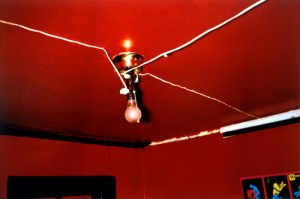
The Covers
I’m having my students photograph their interpretation of their choice of a work of art. I let them do anything from covering a song to a sculpture. Most will do a re-envisioning of another photograph. Here are some examples of photographers looking at other photographers that were posted on Photo Lucida this week.

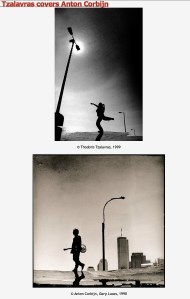 I like the way most photographers end up making a totally new, and occasionally better picture based on a more well known image.
Nancy McEntee’s Unsettling World
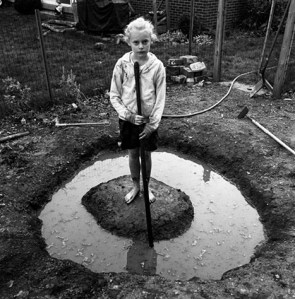
Moat by Nancy McEntee
Fantasy, family and friends contribute to the off kilter quality of Nancy McEntee’s pictures. She’s posted many of her singular narratives on her new website here.
Jonathan Wayne’s New Photo-Succession
Jokulhaup Damaged Bridge, Gigjuvisl, Iceland, 2008

Jonathan Wayne, whose work I mentioned here, has gone live with his ongoing portfolio, Succession. I like seeing a series where Earth triumphs over ego and man doesn’t win. Then again, I’m not so sure Earth has won, either.
Transfigured Landscapes and the Long Ride Through Them
The blog world is larger than the largest newsstand. It is more likely just about the size of a huge library. Fortunately, or not, most bloggers simply rehash other blogs. By the time you’ve followed a few links you’ve come full circle. I’ve been whiling away the hours at AMERICANSUBURB X which is loaded with contemporary pictures and commentary. Here’s a few of the hundred or so pictures that caught my attention.
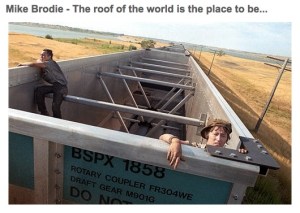 The contemporary American hobo possibly represents our last cowboys and beatniks combined into one helluva hard life. Today’s AMERICANSUBURB X has a strong rail riding portfolio by Mike Brodie.
Railroad riding brings to mind the great transfigured vista that is the global landscape. AMERICANSUBURB X also links to Maximilian Haidacher, a talented German college student who graduates this spring. Haidacher has a terrific eye that brings to mind transfigured landscapes in the tradition of the underrated pioneer of the genre Robert Aller.


Maximilian Haidacher
Below is a Robert Aller picture from the 1980’s.

Lantern Slide Fusions and GigaPan Giggles
Stan Sherer’s re-imagining of old lantern slides from a long gone Smith College mathematician and scientist synthesize the tactile old technology of large plates of taped glass with the artist’s subtle, yet demonstrative visual intelligence.
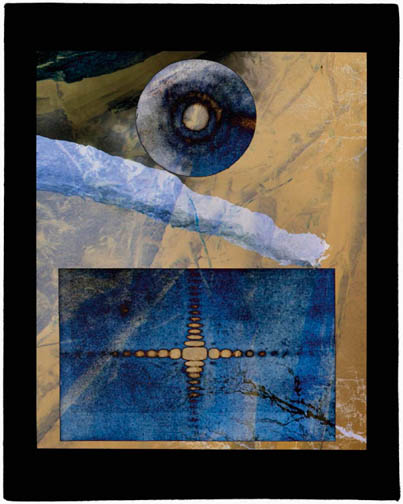 Stan Sherer’s large scale prints are now on exhibit at the Kahn Center in the Smith College Library. They will be on display into March and the exhibition is open during library hours.
People are quickly becoming aware of the astounding GigaPan photograph from the Inauguration. Here is the link and more information about how you can also go GigaPan.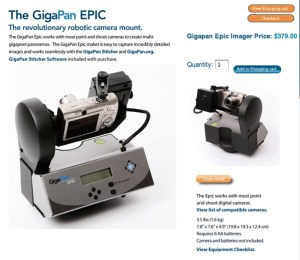
$379 and 6AA batts, Outrageous!
SeeSaw Magazine
I love the magazine that former Holyoke Community College photography student Aaron Schuman has been web publishing for the past 5 years. Here is the latest issue:
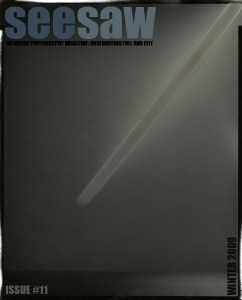
Winter 2009
Chris McCaw’s glorious platinum/palladium contact prints illustrate the absolute fact that there IS something new under the sun. These straight forward pictures of the sun traversing the landscape are made directly onto photo paper in view cameras of varying sizes (up to 20X24 inches). The last time I saw such a successful celebration of pure camera vision was in the ever expanding work of Abe Morell.
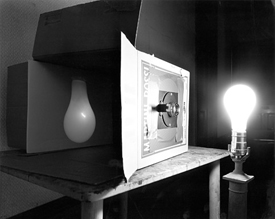
Abelardo Morell
Magnum LS and Dorothea Lange
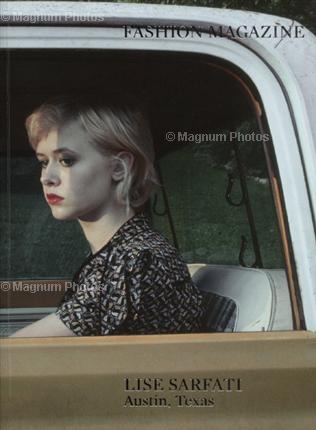
Fashion Magazine by Lise Sarfati
I’m talking about Magnum’s Lise Sarfati. I met her at an ICP awards event about 15 years ago (she was winning awards back then, also). She impressed me as a young woman who walked softly, she appeared small and thin, as if she could become invisible if the moment required. Since then I’ve been following her tremendous trajectory into the ranks of our very best documentarians. Her ability to be where a photographer shouldn’t be, and to see what most photographers wouldn’t see, reminds me of a legendary photographer of history.
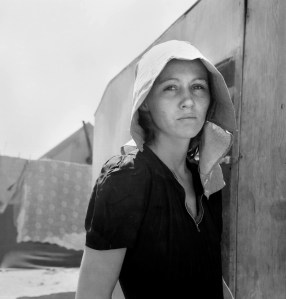
Dorothea Lange was one of the twentieth Century’s greatest image makers. She walked with a limp from a childhood bout with polio. I think that when she would enter a migrant’s camp her hesitant gait would signal to the campers that a woman who understands suffering is approaching. I think documentary photographers need to play their trump card, be it an overblown extroverted personality or an equally large inferiority complex to help them get to where they can get the best picture.
Magnum PC and After School Style
That’s PC as in Photo Contest. Burn Magazine is sponsoring a competition for emerging photographers. The magazine and the contest is curated by Magnum’s David Alan Harvey. He’s the brains and the money behind an innovative way for photographers to participate in the $10,000 run-off. First, there is NO entry fee. If you are a finalist, you will be asked to present your portfolio/project in book form. You must produce, at your own expense, a Blurb-style photo book to send the judges. The theory is that a stack of books will be easier to review than a stack of pictures, slides or image files. After the final decision has been made, everyone gets their book back. Think about how many photo contests are out there where the prize is getting a few pictures published in a newspaper or magazine. This competition stimulates the best participants to put their work into book form. Whether you are a finalist or a winner, you end up with a great promotional tool, a book of your pictures.
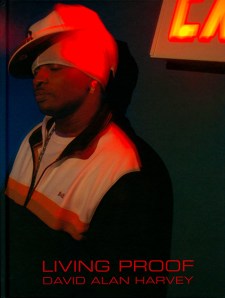
Above from David Alan Harvey’s Living Proof
Moira Lovell’s After School Club has been sitting on Conscientious for several days with dead links. Here’s another coruscating picture from her curious series, which also happens to be a photo competition entry. The link should work, too.

Moira Lovell and School Girl Post-Graduates
Digitalio Rising
Digital photography is ever-present in our contemporary world, but the fine art photography community has been the slowest sector to embrace the no longer new methods of digital imaging. Photographic artists print large scale work using digital systems for major gallery shows, and sell very large digital prints at major gallery prices. For smaller prints and fieldwork, film and the chemical darkroom still seem to be the norm. I find it curious that artists and galleries are resistant to change when, historically, artists are the ones who embrace the new and at times drag the hesitant public into a new era. What is the problem with our first tier photographic art makers? Over at Horses Think there is a discussion about new work from Richard Misrach, Thomas Ruff and Cindy Sherman.
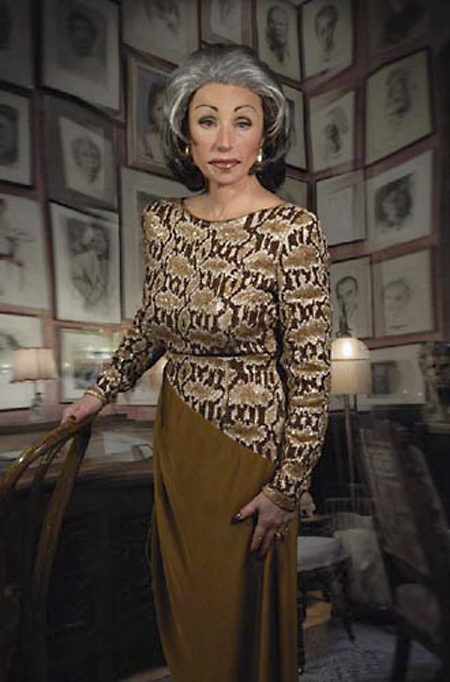
Cindy Sherman can photograph herself as long as she wants.
Horses Think and Conscientious are leading an interesting debate about the nature of new work from gallery stars who repeat formulas that have succeeded in the past. Do galleries discourage their artists from changing? Could those in the contemporary fine art pantheon fear expansion? I’m looking forward to a Cindy Sherman self-portrait, in 20 years, dressed up as a 2029 teen pop sensation with a twist of all-knowing, 80-year-old attitude.
First Class

The first meeting of the Digital Darkroom class at HCC.
Beauty in the Rough

Wendy II, Guadalajara, from Ladies Bar by John Sevigny
The Lives of Cantina Women
John Sevigny’s photography series “Ladies’ Bar” has recently been posted on http://www.socialdocumentary.net. It is a beautiful, difficult, mesmerizing, upsetting portfolio about women living in jeopardy. The photographs picture the prostitutes and paid drinking companions that frequent the down-and-out bars of Guadalajara, Mexico. Sevigny’s exhibit extract states his intention “to create a metaphor for the treatment of women in Mexico and beyond.” The fact that he does this with an effortless clarity of vision intensifies the magnitude of his achievement. There is a compassionate honesty inherent in his many seated portraits of the women simply being with the artist and his camera. Their expressions present a universe of emotions in which the vicissitudes of poverty has made its imprint.
Their gestures of lack and need are re-visualized in Sevigny’s studies of the ladies’ physicality. He pictures their tattoos, clothing and jewelry, or scarcity thereof, with an almost dispassionate interest. These close-ups make the viewer squirm with discomfort or recognition. The artist makes the audience confront his or her own conceptions about what is or what should be. He challenges us with his clarity, yet he compels us with his empathy to expand our own understanding.
Many of the photographs illustrate these ladies in relation to suggestive posters of young women displayed on the walls around the cantinas. Some of the pictures only need to focus on the bar environment to achieve their striking impact. These cantinas offer a microcosm of the fragility of life in a woman’s world. It is an indication of Sevigny’s success when we realize the beauty of his subjects within this paucity of circumstances. The directness of his approach helps us perceive the facts of the pictures. The intensity of his dedication amplifies our concern for the welfare of his subjects. “Ladies’ Bar” works on many levels. Most importantly, they are strong pictures of strong women trying to survive exhausting circumstances.
Frank Ward, 12/08
The Veil of History
Here are two artists looking at the world in very different ways.
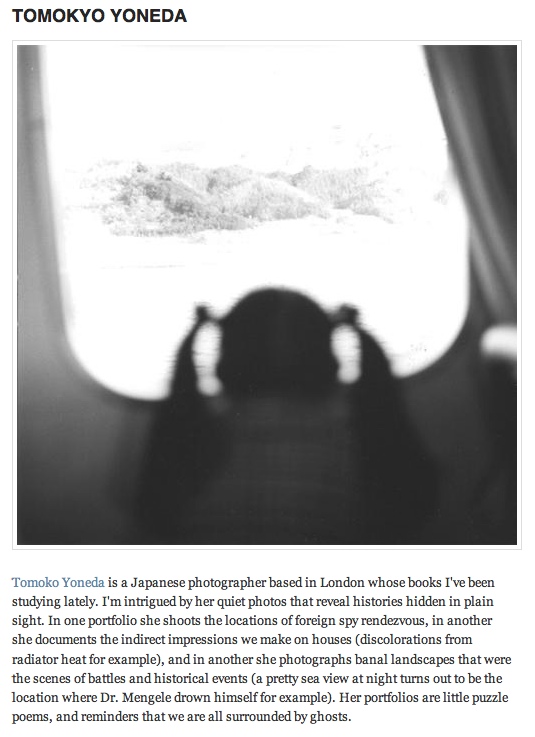
First, Tomoko Yoneda internalizes history and projects it back to us in unexpected ways.
This is from Heading East.
 George Poutachidis is a traditional documentary photographer who is letting digital controls alter what the camera sees in a way that I like, but liking it makes me uncomfortable. I always get uncomfortable when people’s hardships look too beautiful, or when suffering looks like too much fun.
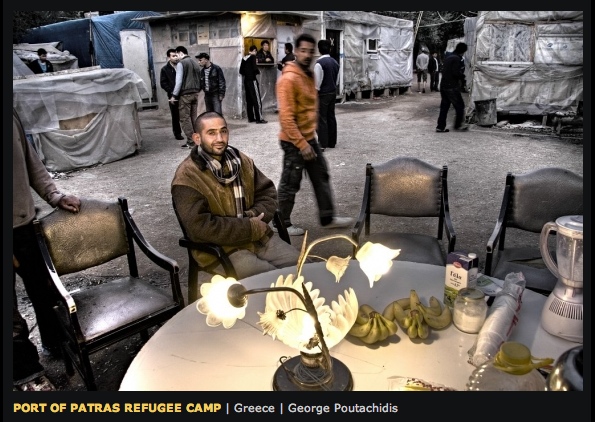
This camp houses mostly Afghan refugees fleeing to Europe.
This portfolio is on the new documentary portfolio website http://www.socialdocumentary.net
There’s lots of my work on there also.
The First Day
Today was the first meeting of my Advanced Photography class. My students wait for me to take a picture.

A MORE IMPORTANT “FIRST DAY” IS REPRESENTED BY
KEVIN BUBRISKI’S RADIANT PORTRAITS FROM THE INAUGURATION.

Visions of the Holy
Jonathan Wayne’s Succession

Jonathan Wayne has been working on a series about nature’s triumph. A couple of years ago we photographed together at the abandoned Holyland in Connecticut. This was my favorite picture from that visit. After man’s effort to cement a religious presence onto the land, Earth responded with an inspired deconstruction.
Intuition Presides Over Reason
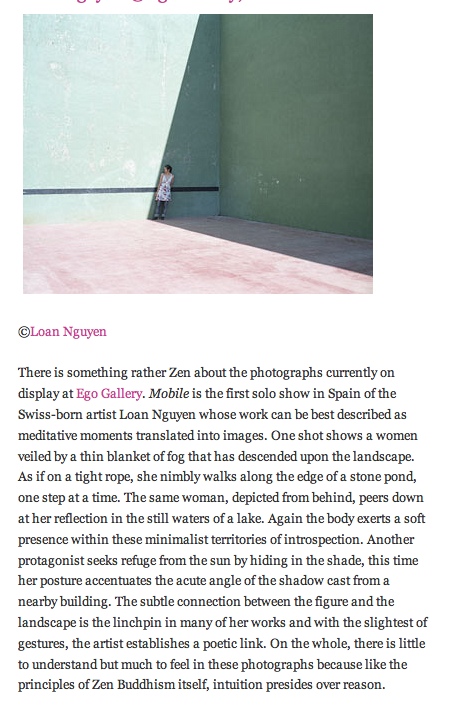 Loan Nguyen’s photograph and text is from Tim Clark’s 1000 Words blog. Immediately below his post is a wonderful series of Yangtze River images by Nadav Kander. If you check out 1000 Words, take a look because it balances out the making-fun-of Kander happening in my previous post.
Contemplative photography is a theme of my Advanced Photography course that starts tomorrow at Holyoke Community College. I am looking for strong pictures about “a soft presence within minimalist territories of introspection”. If you have any suggestions, please let me know.
Obama’s People by Nadav Kander
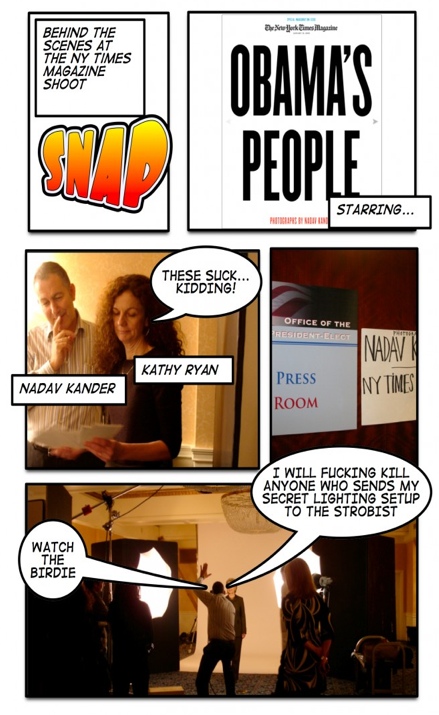 See the whole series at A Photo Editor
Can I Pay You to Look at My Pictures?
The current trend of marketing portfolio reviews to developing photographers is a suspicious one. Are we simply becoming an income generating commodity for arts organizations? Supporting non-profits is not a bad thing and I try to support them regularly. Being critiqued can also be valuable. I have a few problems when these two activities are merged and presented as a necessary step for fine art photographers.
There are a few artists for whom the pay-per-review model could be a success.
1. You are financially blessed.
2. You are aggressive with self-promotion.
3. You are at a very specific point in your portfolio development. Either with a very solid portfolio, or with very little opportunity to get feedback.
Ideally, one would have all of the above qualities to truly benefit.
Here are some other options for constructive feedback for those in any of the above categories.
1. If you are rich you can pay a publisher, such as Aperture, to publish your work. This assumes that your portfolio is decent. You would be amazed at how many well known photographic artists have to do major fundraising, or contribute $10-30 thousand themselves, to pay for publication.
2. If you are energetic with self-promotion you can show work to the MoMa and the Met in NYC, and lots of other museums and galleries almost anywhere. You can do this by simply showing up on a day the museum has alloted for that purpose, or by making an appointment. At a 20 minute pay review, if your work pleases the critic, you will be given some names or institutions to approach in this way.
3. A fully realized, truly great, portfolio will be helpful in getting you in the door of an organization that a well credentialed reviewer may represent. Maybe as many as one percent of attendees fall into this category.
If you are a newbie and have little experience in being critiqued you will find 20 minutes to be just a taste of what real portfolio development could mean to you.
You may suspect that I am writing from a “sour grapes” perspective. I have done many of these reviews and have made some connections. I have had the director of the Eastman House tell me he wanted to give me a show (dismissed after follow up communications). A photo editor from The New Yorker made much effort to include me in the magazine (to no avail, not her fault). One reviewer told me he wanted to personally mentor me and help my career (he never returned my follow-up emails). Another reviewer wanted to get me into her gallery (later refused, without a review of my portfolio, by the gallery owner). One reviewer, a gallery owner, started yelling at me berating my pictures and attitude. Several others have given me solid support.
As an example of a not-for-profit review situation, I once left my portfolio at the ICP in New York. When I returned a week later, I could immediately see by the unique way I had closed the portfolio that it had not even been opened. This was just after it was explained to me that the curator looked over my work and was not interested. Pay-for-reviews are not for every photo artist out there, but it is a guarantee that someone will see your work.
I would like to thank Conscientious and Marketing Photos with Mary Virginia Swanson for stimulating my rant.
 The Coruscating Camera