The Now of Photography

Advanced Photo Spring 2010
This is the first semester of my 1 day a week, 5 hour Advanced Photo class. I feel very optimistic about it because the caliber of the students is outstanding. I know that all students have promise, but there is a certain gestation period necessary to “get it”. I’ve had students that I originally saw as “just passing through” come to see me years later with energy, excitement and talent for their life in photography. My current ART 141 students either already know who they are (I have two professionals in the group), or they are primed to become something. This class includes several previous students who have already shown me their potential. For an example of how ready my crew is, this week, due to a conflict in schedules, I have a field trip and a model planned for over 7 hours of class time. After giving everybody the choice of which 5 hour slot to attend, they all want to go for as much as is offered.
Here’s some back-story. The last couple of semesters I’ve been setting Advanced Photography class time aside for mindfulness practice. The first semester, we sat for 5 minutes or so at the beginning of every class. Students liked it so much that at the end of the semester they wanted to finish with a meditation. Chock one up for the Association for Contemplative Mind in Higher Education.
Last semester, we did the same contemplative exercises with the unexpected outcome of several, if not most, of the Advanced students getting blocked. Non-productivity became the norm. Even though everyone appreciated the sitting practice, only one or two students were making good work. My Basic Photo class (including many of my current Advanced students) was more interesting. I don’t want to blame meditation with neutralizing my student’s creative energy. I have to find a way to integrate self-awareness into the whole class period.
So, here’s the rub. I’ve used the Tao of Photography by Gross and Shapiro for years. I’m beginning to see that their vision of the Taoist yin and yang is too compartmentalized. The first paragraph of Phillip Gross’ Introduction refers to “the perfect Yin and the perfect Yang” as if there were an imperfect yin and yang. Part One of the main text continues with references to “the unliberated photographer” and his or her “constricted awareness”. Certainly, our thought processes are prone to making such distinctions and we are often meticulous in finding our own short comings. I simply want students to see these concepts as ego constructs that don’t engage a truly conscious experience of the world. We all have egos, I just don’t believe mine, or most other egos I’ve been in contact with.
I want students to continue reading the Tao of Photography. There is lots of inspiration inside. I also want students to experience the “Now” of photography. The “Now” of photography is based on openness to what is happening in the present. Rather than sitting with a contemplative mind for several minutes each class, it would be enlightening to work throughout class with an occasional awareness of what our five other senses are telling us. Eyes, ears, nose, taste and touch are the channels to our experience of each moment. Our mind mostly torments us with memories and projections of past and future . We have to give attention to our bodies to become conscious of the present.
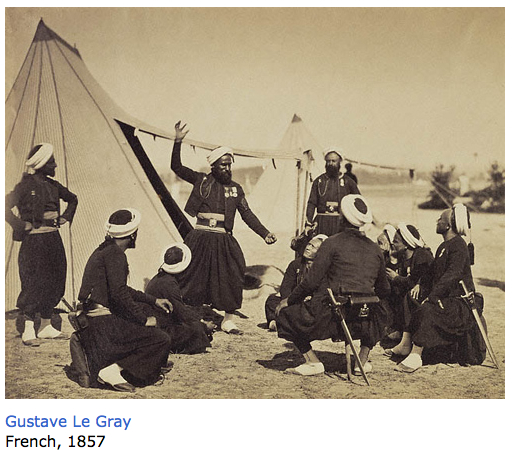
I know our minds provide a constant commentary. Let’s interject some real observations into our ongoing stream of consciousness. For example, you’re sitting in class and I’m talking about Gustave Le Gray (Page 14 in How to Read a Photograph) and you’re thinking that I told you to let go of your fascination with the past. Now I’m talking about a guy from 1857. Don’t pull out your cell phone and text your friend to complain. Consider your response to my presentation on Mr. Le Gray. If you are not open, is it some preconception you may have? Do you object to me and Mr. Le Gray because your chair is too hard? Do you not like what you see in his photographs? Can you consider Le Gray a creative precedent to what you do? Make a statement to the class or tell me about your perceptions. Engage yourself with what is happening around you. Make an effort to open up. Your observations may help me be a better teacher and bring Le Gray into the present.
Robert Aller, David Prifti, Frank Ward

Stone Pile Marker, Tilting, 2009, by Robert Aller
Bob Aller, David Prifti and I dropped off our pictures at the Valley Photo Center yesterday for our show that begins on February 16.
Bob Aller’s 2009 series “Strange Twilight” is drawn from Newfoundland skyscapes, seascapes, landscapes and escapes. His pictures stimulate a profound peace in the viewer. I mention “escapes” but they are more of a bringing back home. These photographs are a celebration of what “is”. Their natural beauty bring to mind the value of clear consciousness in every moment. His work has drawn the attention of the Elizabeth Moss Galleries in Portland, Maine who have offered to represent Bob and give him a show this coming fall.
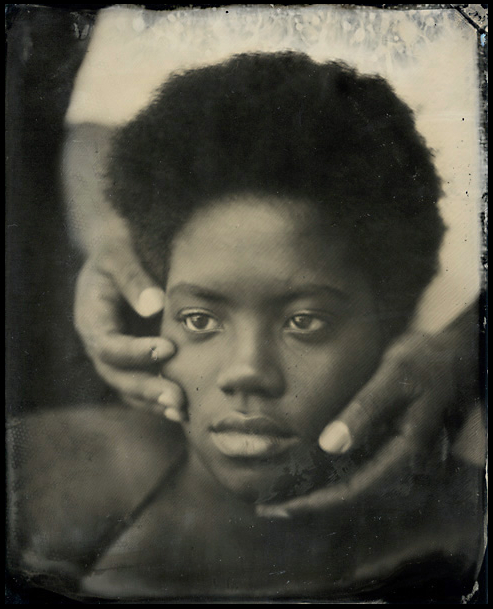
Tintype by David Prifti
David’s 8X10 view camera tintypes, based on 19th century processes, are ethereal and otherworldly even as they depict contemporary moments. To look at his achievement (he’s also been teaching his high school students to do the process) is to see the results of photo alchemy. With his unassuming manner and this body of amazing pictures, I imagine David may be a descendant of Merlin the sorcerer.
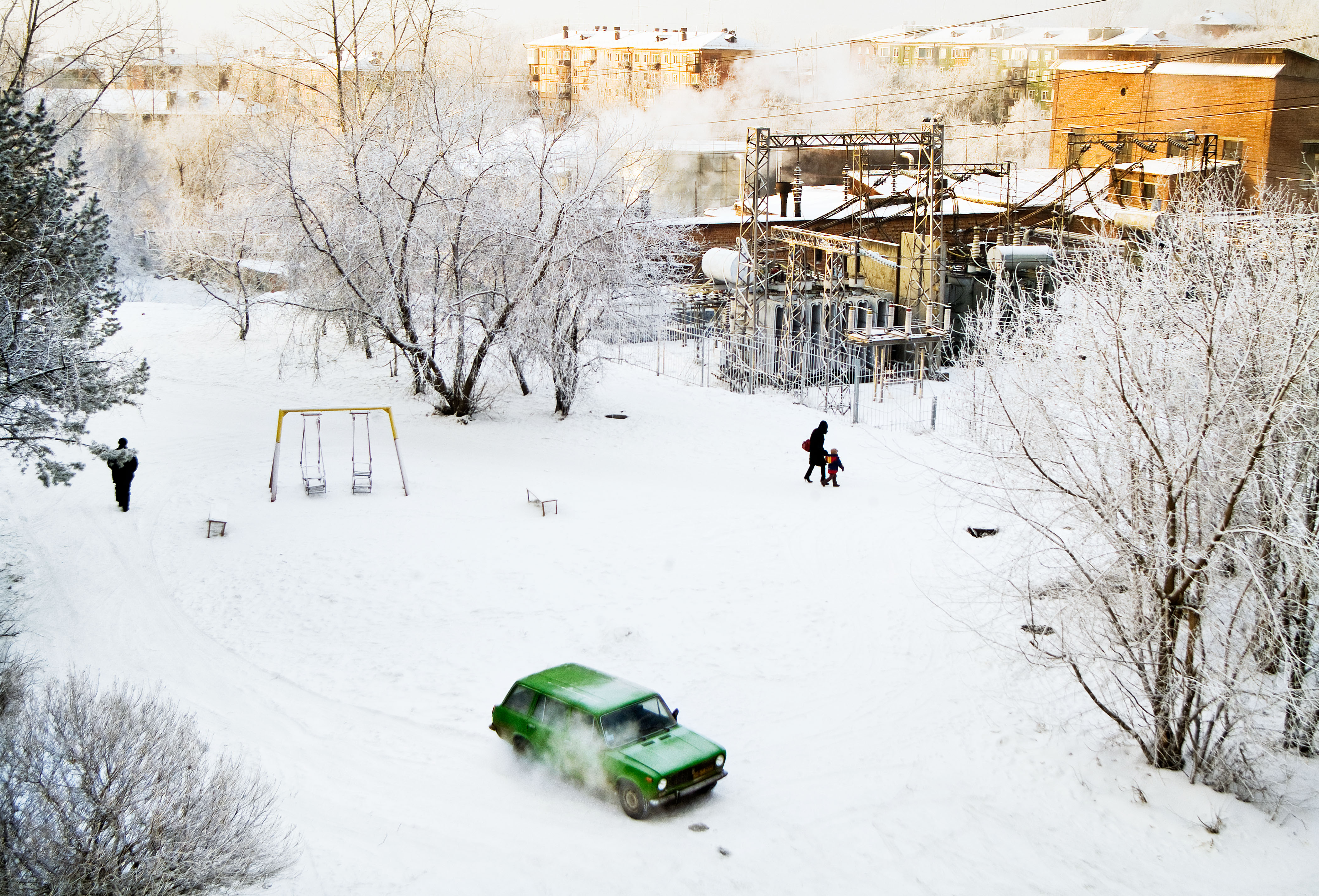
View from Vivian's Apartment, Siberia, 2008, by Frank Ward
I wonder where my pictures fit into this exhibition? First, we have Aller’s transcendentalist contemplation on being in a world dominated by nature.
Next, there is Prifti’s absolute wizardry in imagining contemporary adolescence as an invocation of Julia Margaret Cameron’s 19th century world.
Finally, there is “Asia Central”, my pictures from the Former Soviet Union. Between the transcendentalist and the wizard, I am the ditch digger who tosses one shovelful at a time.
You are invited to our Valley Photo Center reception on Sunday, February 21st from 1-4 on the 2nd floor in Tower Square, 1500 Main Street, downtown Springfield, Massachusetts.
Chuck Stern, David Prifti and Zed Nelson’s “Love Me”
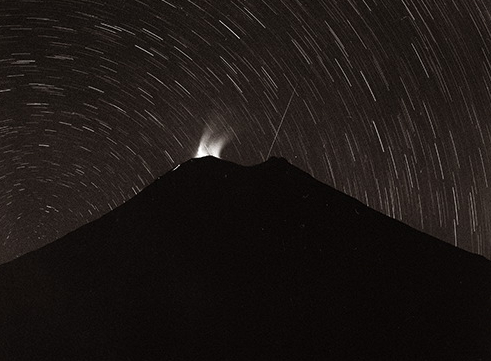
Volcano, Chuck Stern
Chuck Stern’s mid-career retrospective is at the Taber Gallery this month. Selections 1985-2010 begins today. An artist’s talk and reception will happen on Wednesday, Feb. 10th from 11:00-1:00. No, it’s not a midnight party. Our idea of a club scene in Western Massachusetts is the Mickey Mouse Club. Chuck’s talk will be at noon. We’re not just talking pictures here. Chuck is a sculptor, writer, chef (he didn’t prepare the snacks), painter and photographer. I won’t mention his career as a furniture designer. He will talk about the art of being a successful artist. I’ve got to hear that. The legendary Banner Queen Amy Johnquest is the exhibition designer and she will probably introduce him at his talk.
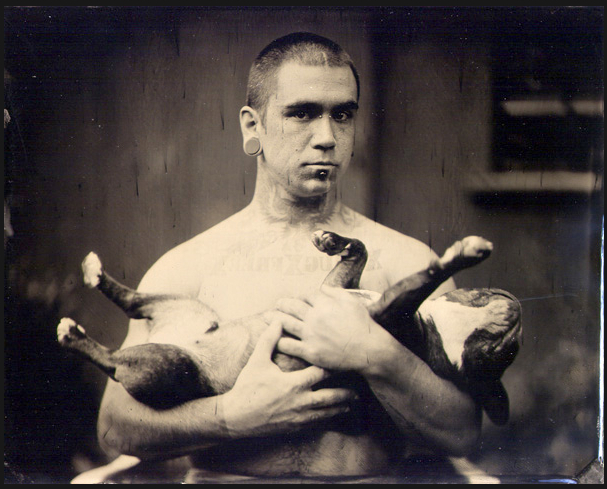
You must see David Prifti's photos in person. Wonderful objects.
The Valley Photo Center show with David Prifti, Robert Aller and Frank Ward will begin on Feb. 16th with an opening on Sunday, Feb. 21st from 1:00-4:00. I’ll remind you again when I get a photo to post from Bob or when he gets his new website up.
Posting David’s man and dog photo brought this Zed Nelson’s image from Love Me to mind.

Ox and Angela, Plastic Surgeon and Wife, Rio, Brazil, by Zed Nelson
Zed Nelson‘s new book, Love Me, “explores the insidious power of the global beauty industry and a collective insecurity, vanity and fear of ageing. In a series of compelling images Love Me negotiates the boundaries of art and documentary, reflecting a world we have created in which there are enormous social, psychological and economic rewards and penalties attached to the way we look.” That’s a quote from the email HOST gallery/FOTO8 in London sent me. I just wanted to mention that former HCC student Aaron Schuman will be in conversation with Zed live at HOST gallery on Wednesday, Feb. 10. So if your excuse for not coming to Chuck Stern’s show is because you are in England, go to Aaron and Zed’s public conversation.
The FOTOfusion Experience

Anna's Lemon by Frank Ward
Last week I went to FOTOfusion at the Palm Beach Photographic Center which had newly moved its location from Delray Beach (paradise) to West Palm Beach (not so much paradise). My first impression was FOTO(con)fusion. I got lost, I showed up late, I made Harrison Funk late because he and Rolfe Ross were waiting for me to go with them to Calle Ocho, Miami. Anyway, I soon regained balance and had a great first visit to the famed Little Havana of Florida. If you click on Rolfe’s link, you can see his pictures from the visit.

Domino Diva, Little Havana, Frank Ward Photo
I have to give props to Rolfe because he told me to check out the Domino Diva. Even though it was early afternoon by then, I was still staggering around in a 3AM wake-up, post-flight daze.
After a rough first Tuesday, I returned to equilibrium by Wednesday. The (top lead) “still life” I discovered when I wandered late into Anna Tomczak’s “Assembling a Photograph” class. There were a half dozen people playing with fruits and feathers by a venetian blinded window. I jumped right in and tossed out the apples and oranges.

Parking Garage Portrait by Frank Ward
I walked into the City Center Parking Garage Friday morning with my Leica M6 and Noctilux f1.0 over my shoulder. The legendary David Burnett was there with some models giving a class on available light portraiture. He yelled, “Where’s the guy with the Noctilux?” I was a guy with a Noctilux, so I jumped in. I stayed with the class even after he hollered at me for shooting my 1.0 lens at f16, the opposite of what I should have been doing. I soon figured out that my f-stop ring turned in the opposite direction to my Nikon lens and was able to redeem myself. A little later, I came across another guy in the class with the new Leica digital M9 and $10,000 Noctilux F0.95. He was shooting with his lens cap on so I didn’t feel like such an idiot.
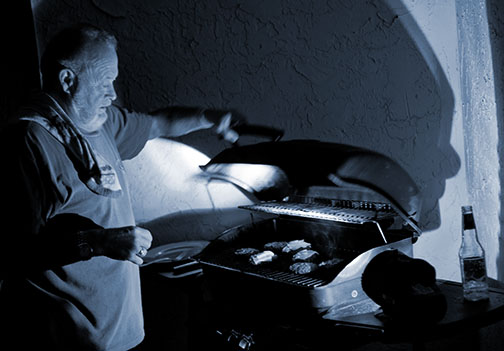
Steve Grilling by Frank Ward
In addition to “professional development” I was in Florida to visit my family. Here’s my brother-in-law Steve Hoxie grilling burgers. Just in case anyone who funded my trip reads this, I want to say that I went to lots of great classes and portfolio reviews. I already started using what I learned on my first day teaching for spring semester.
The best part of FOTOfusion, as always, are the portfolio reviews. They reserve a large room where, morning and afternoon, they have 6-12 different photo-world movers and shakers. I went every chance I could get to talk with the top people in the business. Maura Foley, one of the New York Times top picture editors, was sitting around waiting for someone to show her their portfolio. Robert Pledge, the President of Contact Press Images of New York and Paris, remembered me from three years ago. These professionals really do have photographic memories.
I got consistently good feedback from key photo people including Pulitzer Prize winner Stella Kramer and Rick Friedman, who is the President of the Boston Press Photographer’s Association. My experience was better than the first time I went to FOTOfusion in 2004. I was showing work from my Curious Footprints book. The reviewer, a gallery owner, nearly chased me out of the room when I didn’t agree that I should be illustrating children’s books.
 Platypus from Curious Footprints, 2004
A fortuitous series of events occurred during the reviews. First, I saw professor/photographer Steven Nestler. He is starting a promising portfolio website called ipsophoto.com. Steven loved my Central Asia work and told me to show it to his most famous student, Scott Mc Kiernan. Scott is a barrel of dynamite and a working photographer who also publishes DOUBLEtruck Magazine, runs zReportage.com, and is the founder of ZUMA PRESS. I asked for an appointment and was told by FOTOfusion that, if I want to see Scott, I should see Ruaridh Stewart first. He is Zuma’s News Director. I had already made an appointment with Ruaridh (Rory) because I liked his name. We met and made a clear connection. Later, I met Scott who, literally, shoots off sparks (as in “coruscating”). I did mention that he’s a barrel of dynamite. The result is that I am now: (see the graphic)

So thank you to Ruaridh, Scott and Steven for making nice things happen. There will be another “all about me” post before I can return to the photo education theme that I am more comfortable pursuing. In the previous post, I forgot to mention the opening date of the Bob Aller, David Prifti, Frank Ward Valley Photo Center show in Springfield, MA. It opens on Sunday, Feb. 21st. from 1-5. For student edification, attendance will NOT be taken.
UN / FAMILIAR and the VPC
 UN / FAMILIAR at Pictura Gallery- photo by Frank Ward
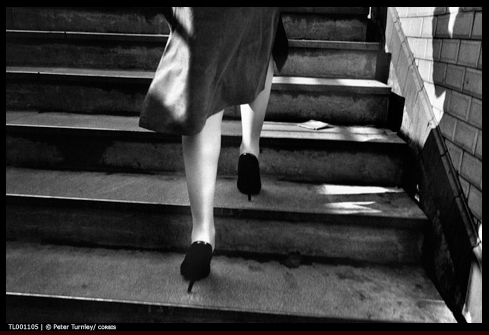
I’m involved with two shows opening in February. I’ve spent the past 6 weeks prepping pictures rather than blogging. UN / FAMILIAR opens on Feb 5th in Bloomington, Indiana at Pictura Gallery. It is a three person show with Peter Turnley, the top-notch photojournalist who lives in Paris and spends his time traveling, publishing and garnering awards for his pictures, and rising star Garrett Hansen.

From Peter Turnley's Paris portfolio
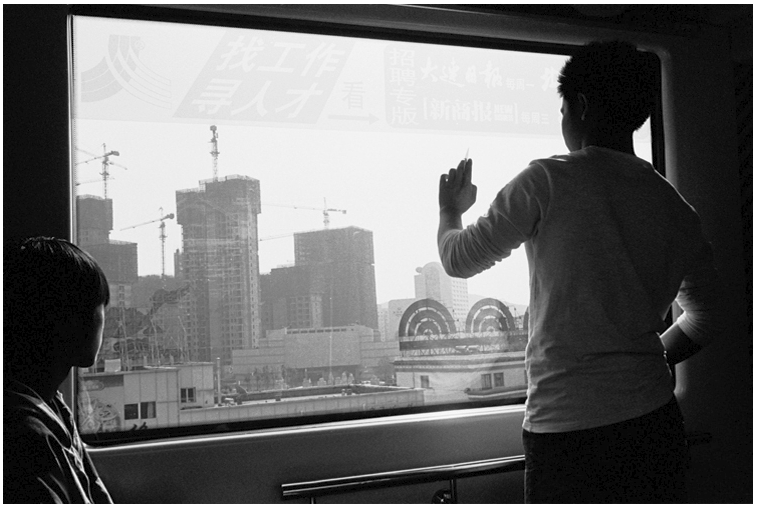
From the China portfolio by Garrett Hansen
That’s a good threesome as I’m placed right between the seasoned pro and the up and comer. The theme works because Peter is showing his acclaimed Paris portfolio and Garrett is showing his recent work from China. My pictures are about the countries in between the economic powerhouse of the European Union and the Peoples Republic of China. I don’t have anything complimentary to say about China so I’ll simply label it another major player. Between the two are the countries of the Former Soviet Union. That’s where I’ve been making pictures for much of the last decade.

MM in Vladivostok by Frank Ward
VALLEY PHOTOGRAPHY CENTER IN SPRINGFIELD, MASS.
The second exhibit is at Tower Square in Springfield, Massachusetts at the Valley Photography Center. I’m also keeping high-end company in this three person show. Robert Aller and David Prifti both have work at the MoMA in NYC and David is a 2009 winner of the coveted Mass. Artist Foundation grant for photography.
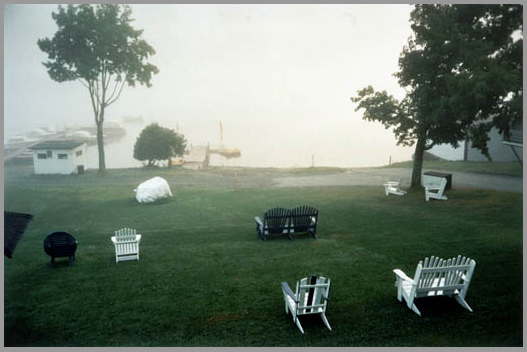
Photo by Robert Aller

Photo by David Prifti
Bob Aller’s picture (above) is not one that will be in the show. He will be including 2009 work from Newfoundland. I don’t know what David Prifti will exhibit. He is very “hot” right now with his historical references to literature and art history combined with 19th century alternative processes.

Four Soldiers, St. Petersburg, Russia, 2008, by Frank Ward
I am now working my way back to a weekly posting rhythm. More to come from FOTOfusion in West Palm Beach next week.
Dennis Stock 1928-2010
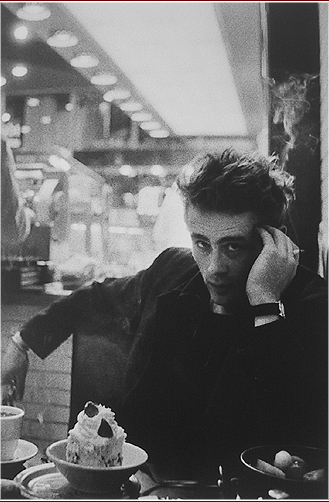
James Dean by Dennis Stock, 1954
Dennis Stock died Monday in Sarasota, Florida. He was my first photo hero. I didn’t know much about art photography in the early 1960s. As a teenager I mostly knew about movies, James Dean, and music, Miles Davis. I didn’t listen to much pop music before the Beatles. I was a Miles Davis fan. I didn’t even go to the movies that much. My sister, who is 7 years older, loved James Dean so I figured he was “cool”. Dennis Stock was the name I saw when I came across pictures of Dean and Davis. As the 60s evolved into the flower power years, Dennis Stock was the photographer who took the pictures of the hippie life style. The hippie rituals were well documented by Stock. I loved what he saw.
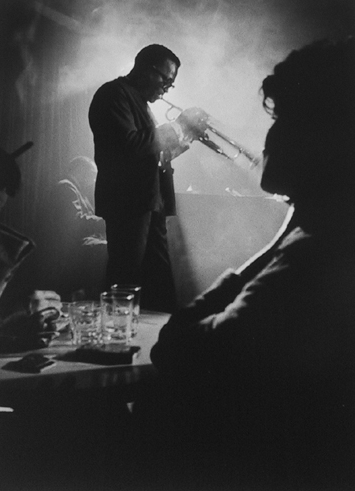
Miles Davis by Dennis Stock, 1958
So now he’s gone and I haven’t thought about him in years. I have his book, California Trip, published in 1970. It’s really dog-eared by now. The 100 pages of photos are reproduced at a quality somewhat lower than today’s newsprint. I don’t recall if the book always looked this bad, but the pages are yellowed at the corners and shadow detail in the photographs is zero. The pictures aren’t even that good. He seems to be really an outsider looking at California from a distance. His long lenses give the book a voyeuristic aspect. He was a Magnum photographer and in his 40s by 1968. The pictures seem primarily photojournalistic, not personal like Elaine Mayes’ pictures of Haight Ashbury. I guess his best photos were actually made in the 1950s before the photographic revolution created by Robert Frank, Diane Arbus and other new documentarians. Now, I’m attracted to his pictures of celebrities-Marilyn Monroe, Audry Hepburn, Grace Kelly. He was there at the “birth of the cool”. By the time the 60s got into full swing, which was actually about 1970, he wasn’t so “cool” about it anymore.
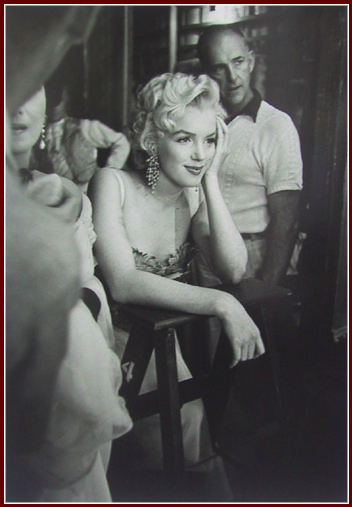
Marilyn Monroe, 1953
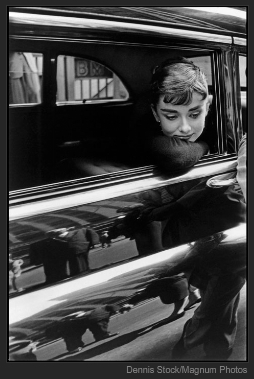
Audrey Hepburn, 1954
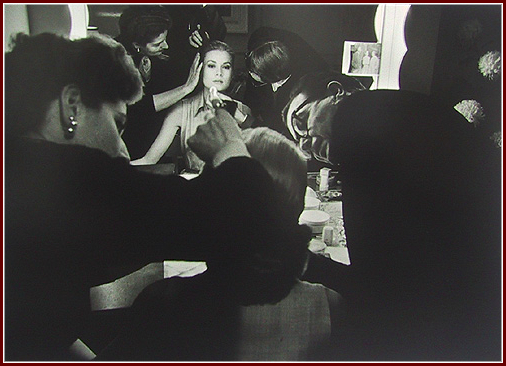
Grace Kelly, 1964
I was just noticing all the vertical pictures Stock took. That was the way photojournalists worked in the magazine era. Everything had to conform to the printed page or else you wouldn’t get published.

Venice Beach on Brucemas Day
FYI, Brucemas Day was an event held for Lenny Bruce in Venice, CA in 1968. Maybe it became an annual event. Most likely people now think it’s about Bruce Sprinsteen.
Kevin Bubriski and the 400

December 10, 2009, Bennington, Vermont, USA
Kevin Bubriski has been following the most recent Afghanistan deployment of 400 National Guard members in Vermont. His clear-eyed camera is bearing witness to the sacrifice and bravery of extraordinary people plucked from their ordinary circumstances.
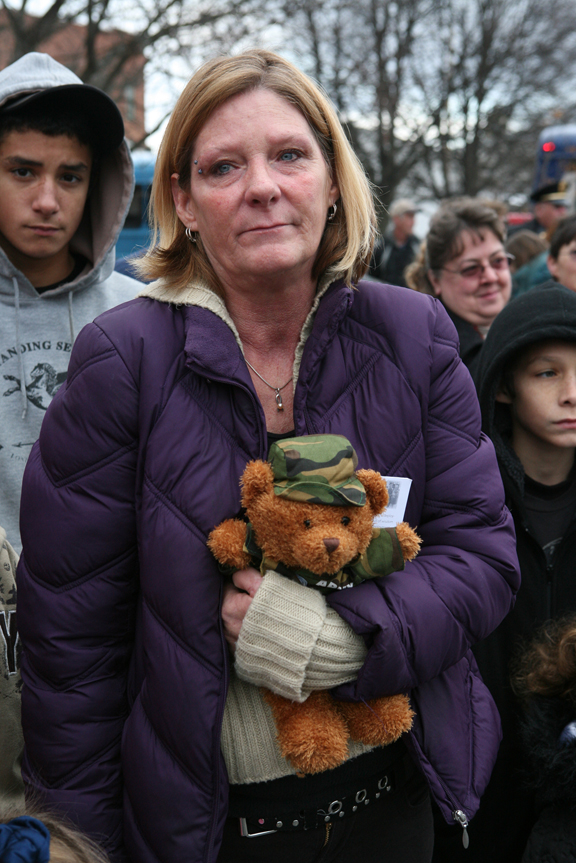
Photographs by Kevin Bubriski, 12-10-09
Kevin has consistently been an impassioned observer of how international lunacy can reach out and grab everyday people by their throats and hearts. He published Pilgrimage, Looking at Ground Zero in 2002 and has his 2008 American Veterans portfolio on SocialDocumentary.Net. Go to SDN to see more of his pictures of the 400 from Vermont.
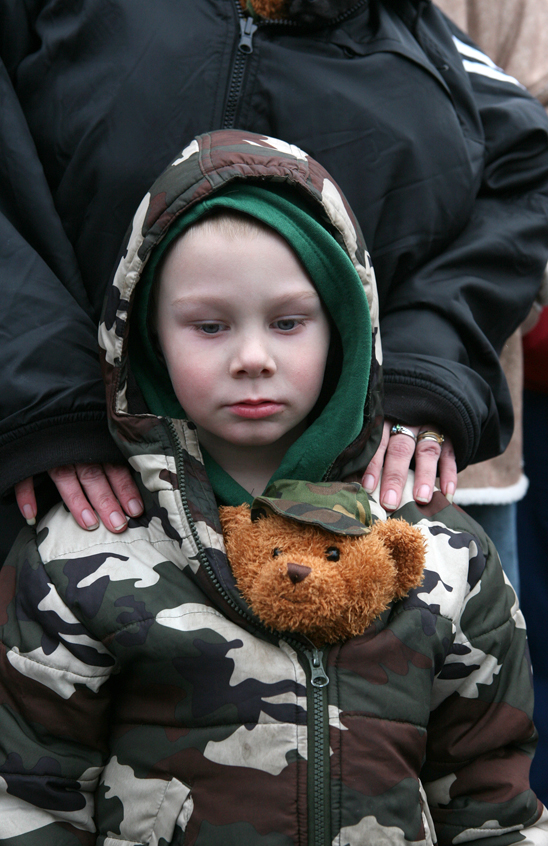
Photography by Kevin Bubriski, 12-10-2009
Kevin’s pictures are more about the people than the policy. I’m critical of Obama’s unsound effort to clean up Bush’s Afghan mess. The war in Afghanistan was lost when Bush cut back on his search for Osama Bin Laden to pursue fabricated aggressors in Iraq. The war in Afghanistan was at one time a so-called “just war.” The US gave up its “moral high-ground” when it cut back in Afghanistan to declare war on Iraq. How many lives and dollars will America continue to expend trying to recover from 8 years of Bush policy disasters?
Ten Years After
I’ve gotten blogged down the past couple of weeks and simply have not been posting. I don’t know if it is heartening or depressing that I have 100 readers a day regardless of posting or not.
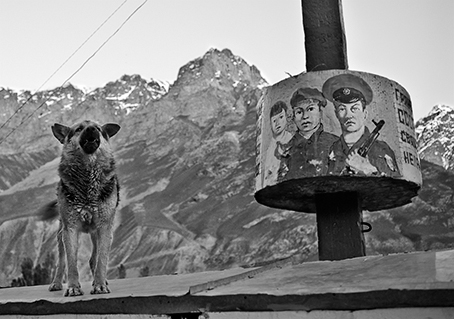
Roof Dog, High Pamirs, Tajikistan, 2009, by Frank Ward
This coming week is the last of the semester and I have been thinking about my students. I feel like I’m some kind of watchdog, or quasi-militant, manning the gates of “art” and searching all comers for the right credentials. I’m actually more like the bouncer at the door to a “downtown” club. I’m scanning the crowd to decide who might fit the desired profile. From my fantasy rooftop overlook, I rarely see the fire inside that I look for in potential artists. My digital class has my most dedicated members. Many don’t work particularly hard, some always have Facebook opened on their desktop, and most don’t even listen to me. That said, they are producing some good pictures. I think maybe two of them actually look at this blog. That’s better than zero, which is an estimate of how many from my other classes check out this blog. So, before I say goodbye to students for the next six weeks and start reconsidering my own concerns, I want to tell students one more time that the key to their own art making is in front of their faces, even in front of their cameras. Our personal creative power rests in our awareness of the gifts of the moment. Check out Herman Nicholson’s simple portraits of one person.

From "Stand Guard Over the Solitude of the Other" by Herman Nicholson
The end of 2009 marks the close of the first decade of the 21st century. Ten years ago Post-modernism had run its course and I wondered where documentary, or what Robert Aller calls “expository” photography, was going. This kind of photography is about the art of seeing the world as it is. For me, that “is” doesn’t have to be a meticulous record of something in the world. It simply must do what every photograph basically, inherently does. A photograph points a finger at the world. A problematic issue arises when, like the zen koan about mistaking the finger pointing at the moon for the moon, people assume the photographer’s intention is to replicate the world. The artist may want to apply his own impressions to the world. He may want to move some furniture, like Walker Evans did in his pristine Let Us Now Praise Famous Men pictures. If the picture is the finger, the artist pointing the finger can be fabricating, directing, collaging, HDRing or snapshooting. (S)He just has to succeed with graceful intention to indicate something about our world that interests an audience. Ross Mantle’s improvisations on a demonstration are a good example of a new freedom in editorial photography.
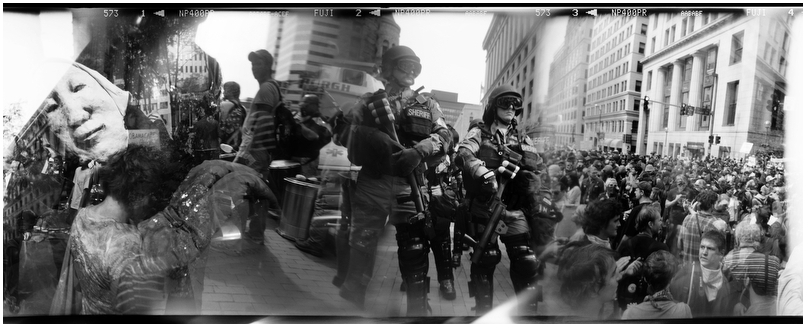
From the G20 Conference of September 2009 by Ross Mantle
One point that troubles my students is when they don’t feel that their pictures and my (the audience) appreciation coincide. Their prosaic pictures of kittens/ cars/ kids/ cows do not resonate. Sometimes this is a question of where to stand. I want to ban zoom lenses from students because zooms alienate new photographers from their relationship to the world. Their proximity to their subject becomes a twist of the wrist rather than a true point of view. Mike Sinclair’s kid portrait below seems made from just about the right spot. The angle of the curbing adds grace to the composition considering the tentative touch the boy’s shoe has to the curb.

From Where Are You... by Mike Sinclair
This brings me to the title of this post. Ten Years After was a rock group that I saw at the Boston Tea Party circa 1967. I thought they were great. In retrospect, they weren’t. I was wrong and I am often wrong. Maybe my student’s pictures will improve with time. Maybe their pictures will be more powerful in another millennium, if kittens/ cars/kids/cows become extinct.
Charis Wilson Photo Icon

Edward Weston and Charis Wilson
Charis Wilson died last week. I’ve been uncomfortable reading the obits. When the NYT describes her first as Edward Weston’s lover, I feel like that isn’t the top of her list of personal achievements. There is an interesting recent interview with Charis at Photo Icon. Charis doesn’t say much to negate Weston’s image as a sexually obsessed adult male, who left a trail of models and/or ex-wives including three extremely talented 20th century artists: Margrethe Mather, Tina Modotti and Sonya Noskowiak. Charis does help us understand the passion that Weston shared with all his partners.
Gregory Crewdson
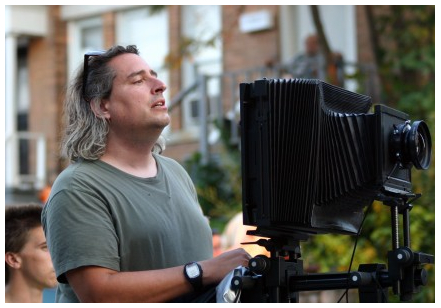
Crewdson by Christopher Peterson
I was just sent this flawed, yet interesting tale of Gregory Crewdson at work in Pittsfield, MA from Alan Griffiths over at Luminous Lint. It was posted on JPG. JPG is the site that never paid me the promised $100 for publishing one of my photos in their magazine. I keep threatening that I will blog about how illegal and unscrupulous that is. I guess they don’t care because they have a 100,ooo other photographers who would be happy to be published in their magazine. Regardless of my “sour grapes” for being ripped off by JPG, the story fits well with the Photographers Speak that I posted yesterday.
Photographers Speak
This week I want to point out the easy availability of several photographer’s lectures and interviews.
First, one can easily search a name on YouTube and come up with some amazing video source material. Try searching for Garry Winogrand, one of our greatest observers of gestures and expressions.
The International Center of Photography has a large amount of material in both audio and video that could become a young photographer’s master class on line. I suggest starting with the Abelardo Morell Camera Obscura video from 2004.
AmericanSuburbX is a wonderful blog of interviews. Some writers are complaining about their lack of copyright agreements, but I’m loving their open access. Check out the essay on Robert Frank’s America.
A current interview with Frank Ockenfels 3 is over at A Photo Editor. Students may appreciate his candor about high school antics as he learned how to photograph at the expense of the school’s cheerleaders.
Here’s a pile of Polaroids that I shot with Frank Ockenfels 3 in Woodstock many years ago.
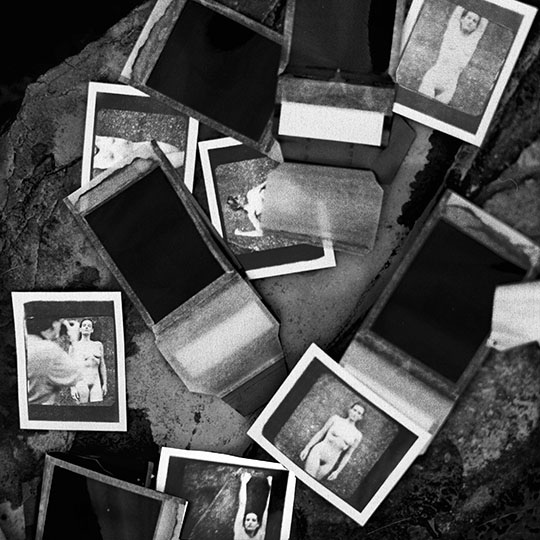
Natasha's Polaroids
Positive Intentions

Pre-Marital Bliss by Tim Veling
I keep telling my students to photograph their life. New Zealand photographer Tim Veling has been doing just that with mostly wonderful results. Thanks once again to Jorge Colberg for posting the link.
I guess I’m a bad example to my students because I’m always running off to Asia for my pictures. This past week I went to Florida for a few days and photographed my Mother, 87, and my Father, who will be 91 next month. It’s not exactly close-to-home picture making, but it’s my parent’s home.
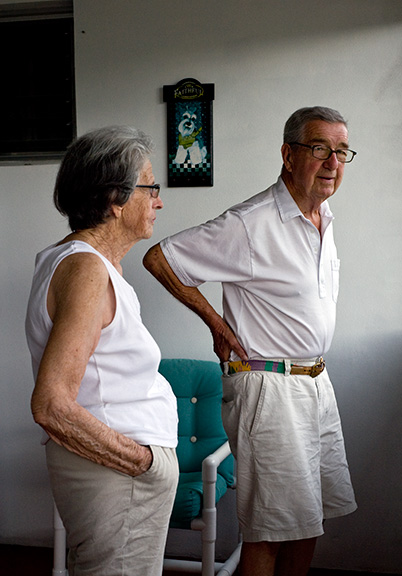
Ma and Dad, Jupiter, Florida, 11/2009, Photos by Frank Ward
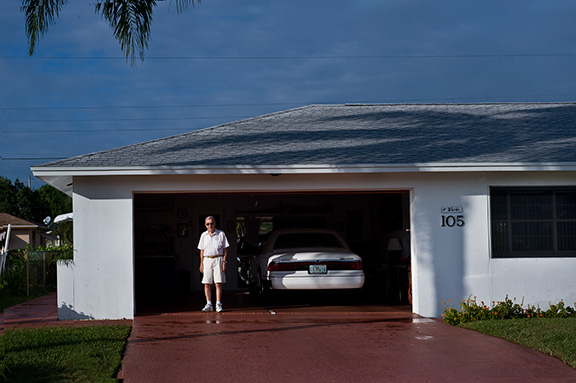
Dad at Home, Jupiter, 11/2009
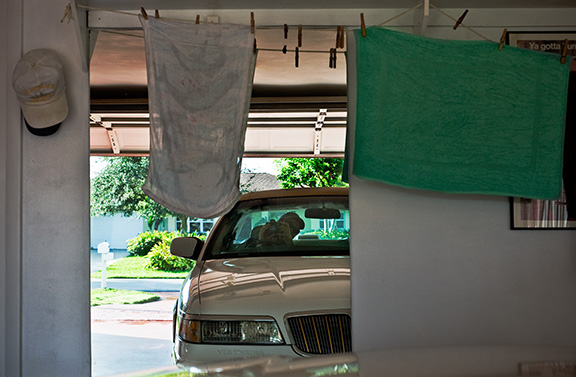
Self as Driver, 11/2009, Florida
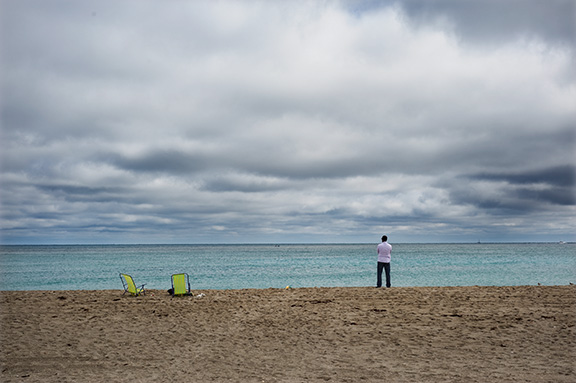
Juno Beach #1, Florida, 11/2009

Juno Beach #2, Florida, 11/2009
We took a ride to the beach. During the few minutes we were there the ocean gave me two looks. When the sky is cloudy Florida’s light is fantastic.
Since I’m doing an all-about-me post, I have one more link to add. Antero de Alda, the excellent Portuguese photographer and on-line publisher, is featuring me on his site this week. Check it out for Dark Is the Night, the old blues song that he chose to accompany my pictures.
Limpid Clearness and Consummate Perspicacity
 Limpid Clearness
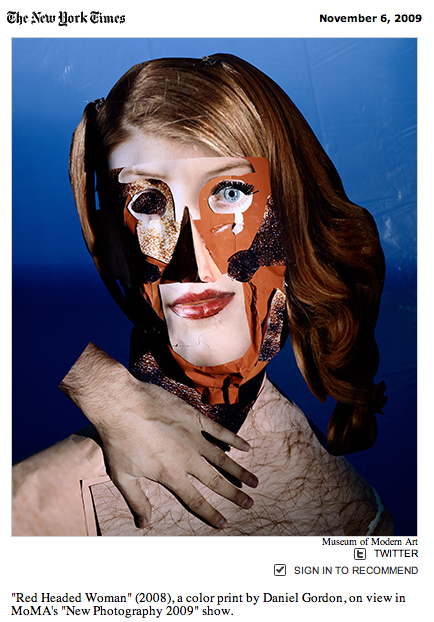
I saw two articles on-line this morning that stimulated my thinking about contemporary photography. First, my artist/writer friend Chuck Stern sent me this review from the NYT about three exhibits featuring contemporary photography currently in New York City. I had been following the New Photography 2009 show that recently opened at the MoMA, but had not been impressed by the pictures as presented on-line. OK, I know I should drag myself down to the City to actually look at art in person. I’ll refrain from talking about the art and simply say that the reviewer, Karen Rosenberg, writes about abstraction being a major trend in contemporary photography.
I remembered an article that John Sevigny wrote several months ago which argued for the abstract in photography. “Photography Must Die” is an intriguing manifesto from a straight, primarily documentary, photographer. He scolds us all for our lack of awareness of art history and absence of clarity about our own vision.
Consummate Perspicacity
Today, Photolucida announced its 50 finalists for this year’s book publishing award. 593 entrants put up a couple of hundred dollars each to roll the dice with over 200 reviewers to determine if their work will make the cut. First, 175 entrants made it through a pre-screening committee composed of over a dozen photographers and photo professionals. The chosen ones were then sliced down to the finalists who are asked to jump through a few more hoops before the 2 winners of the publishing award will be announced. In the past, I’ve been critical of the whole Photolucida concept. Why not simply send your portfolio to publishers to get rejected at no charge? I now see 2 reasons. This year Photolucida is presenting their schtick with such good humor and grace that I guess it may be worth the cash. And, most importantly, the track record of their books has been amazing. Their publications make waves in the photo world. “Waves” is a pun based on the surfer portraits that Joni Sternbach published as a winner a couple of years ago. Her photos are wonderful in person (yes, I actually went to Brooklyn to see them). I don’t know if the alternative processed pictures impressed in book form.
Alejandro Cartagena
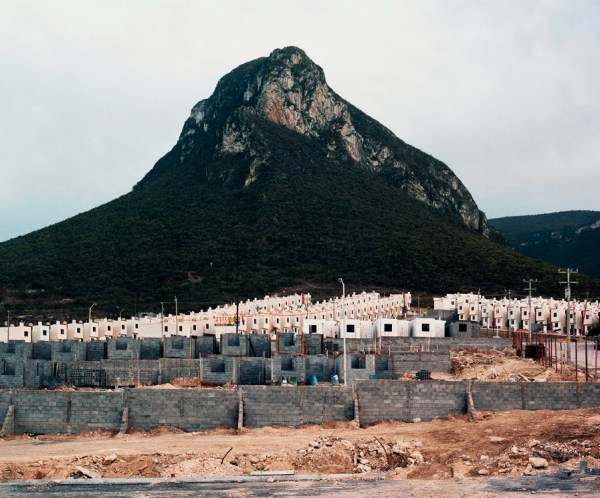
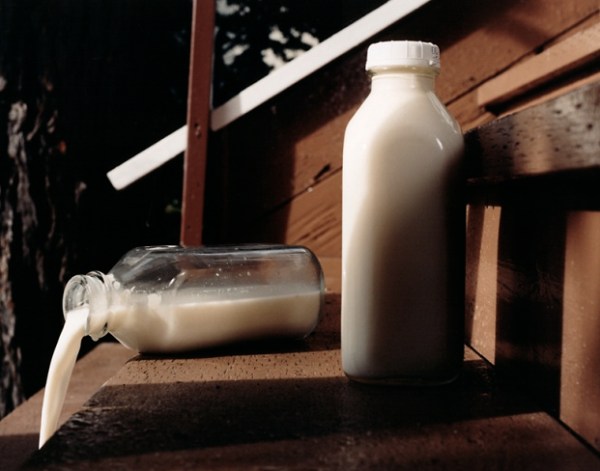
I was surprised at how many of the 50 finalists I was familiar with. For instance, I previously posted work by Alejandro Cartagena, and Birthe Piontek created one of my favorite contemporary photographs:
Birthe Piontek
I request all my students, and those who want to be inspired by the everyday wonderfulness of life observed through a camera, to check out Birthe Piontek’s site.
For those of you who are flummoxed by my playful vocabulary choices, “limpid clearness and consummate perspicacity” is a quote from Herbert Guenther’s Kindly Bent to Ease Us. The words are a translation of the Tibetan term for the enlightenment experience. It is described in this link as “a radiant and ecstatic ‘openness’ devoid of subject and object or center and periphery.”
And the Winners Are…
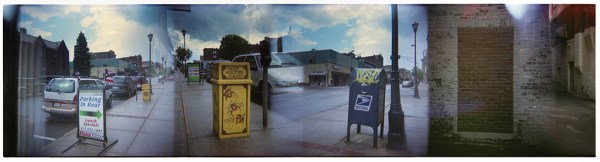
This is the Grand Prize Winner– 4 Boxes by Jeffery Byrnes
HCC alumni Jeffery Byrnes’s multi-frame picture captures my attention because it bridges the divide between traditional photography (in his case a plastic lens film camera) and the digital world (the combining of frames in Photoshop) without overly manipulating the finished picture. UPDATE: I misread this image. It is a total film capture as is. Wonderful work Jeff.
Jeff’s business partner, and also an HCC alumni, Tim Lastoowski takes the First Place Prize in Black and White for his purist, modernist rendering of form and function below:
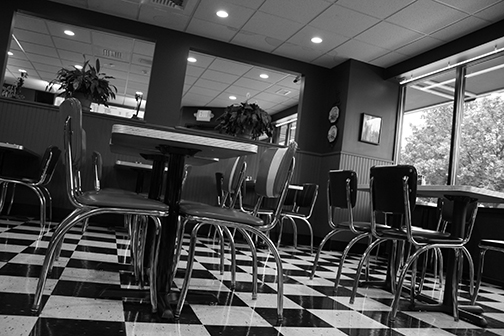
Photo by Tim Lastowski
Tim Lastowski and Jeffery Byrnes are co-owners of True Resolution.
The winner of First Place in Color Photography is Mary Anne O’Connor for her true graphic dynamism in Windows and Reflections.
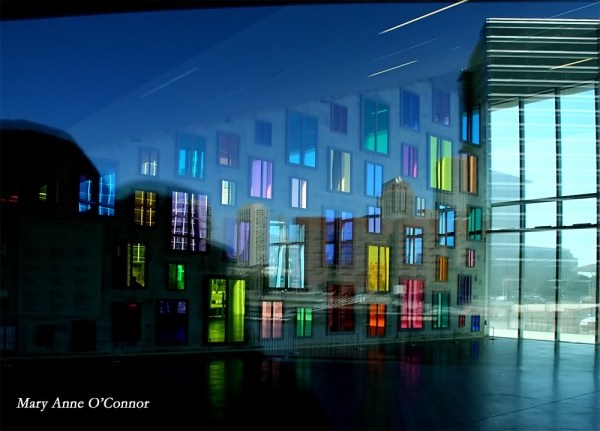
by Mary Anne O'Connor
I don’t know what’s going on in Mary Anne’s picture, but I like what I see.
The Special Jury Prize goes to John Balthunis for his magical, clear-eyed capture of objects in the world.
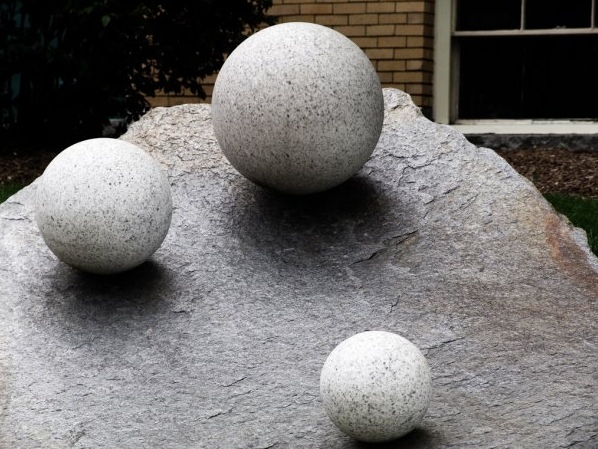
By John Balthunis
The HCC Photo Club wishes to thank the hundreds of past, present and future members who entered, or at least thought about entering, our Photo Club Contest. Every picture, if not every entrant, deserves recognition. I would also like to thank Robert Aller and Chris Lizon for their contribution toward determining the results of the competition.
Centering in Holyoke
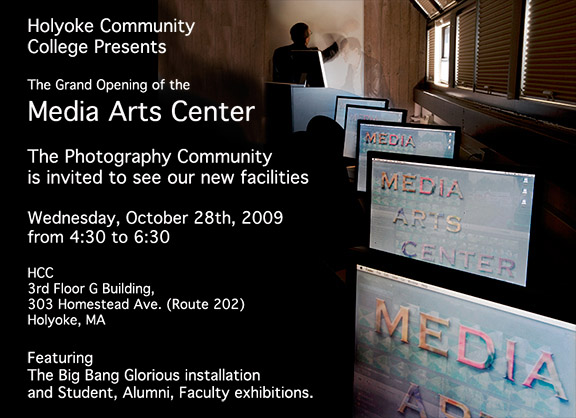 This is the week of the Open House at our new Media Arts Center. Drop by on Wednesday afternoon if you are in our general area of Massachusetts. HCC is about 2 hours west of Boston.
THORP AT TABOR
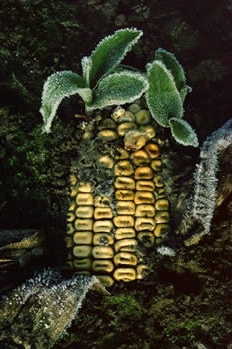
From the "Corn" series by Gregory Thorp
Also on Wednesday, October 28th, is the opening of Gregory Thorp‘s show at the Tabor Gallery. The Tabor is HCC’s fabulous exhibition space lovingly lorded over by Amy Johnquest. Her installation of Gregory’s hard to classify pictures about text and context in colonial New England is very powerful. It’s not about corn. The show probably packs more of a wallop if you are in the gallery alone, but come for the reception. The opening is from 11:00 – 1:00 with Gregory giving a slide talk at noon. He has a 30 plus year career of making spectacular pictures. I first saw his work when it was published in the late 1970s in American Photo magazine. I’ve been a follower of Gregory’s vision ever since.
OK, so you drive all the way from Boston and you’ve got three and a half hours to kill between Gregory’s show and the MAC Open House. No problem. Bring your camera and visit Holyoke in the rough.
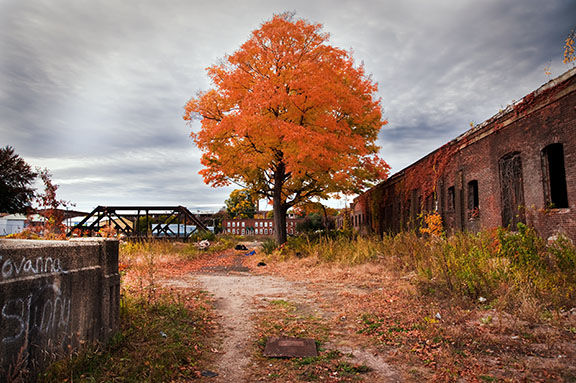
Factory Foliage, 2009, Frank Ward
Last week my Advanced class went on a fall foliage field trip. The trees are more leaf-free this week, but architectural wonders abound. These pictures epitomize the current conditions in small city New England. My class is looking for the beauty in the midst of decay.
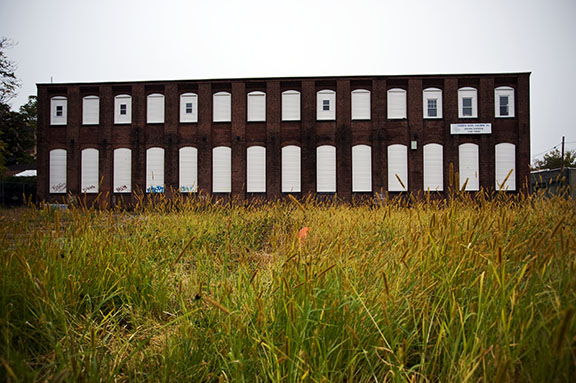
White Windows, 2009, Frank Ward
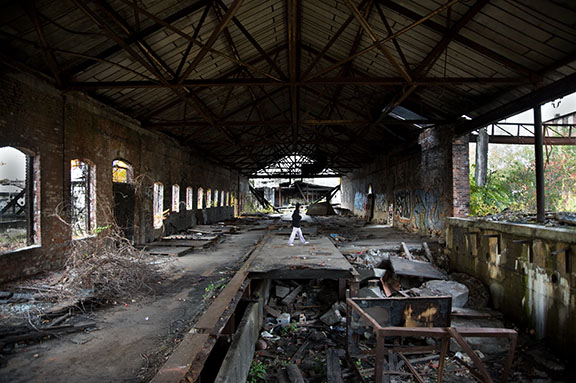
Post Industrial Interior, 2009, Frank Ward
I’m praising Holyoke, with its own “college on the hill.” Below is a picture of another college (I can’t remember if it is on a hill). I’ve been spending the week looking at my work from Central Asia.
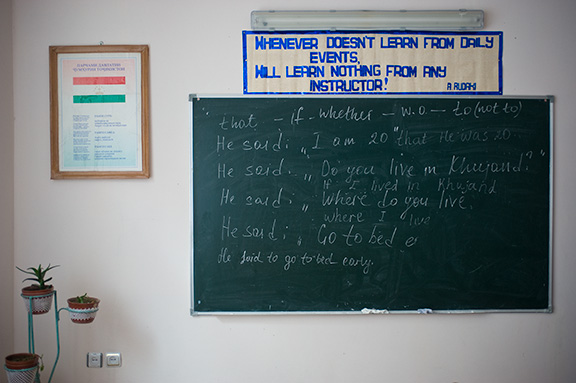
English Classroom, Tajikistan, 2009, Frank Ward
I thought the above picture from my travels this summer has the appropriate theme for this post about education and opportunity.
I’m also going through my Central Asia archive from the 1970s and posting some on my Asia Central blog. Take a look and I look forward to seeing many of you on Wednesday at HCC.
Two Women Who Look

Elaine Mayes
“I’m not interested in creativity, I’m interested in seeing.”That’s a quote from Elaine Mayes at Hampshire College yesterday. She guided her audience on a personal voyage through her career of seeing.
Here’s a picture she took on Hampshire College campus when she was teaching there.
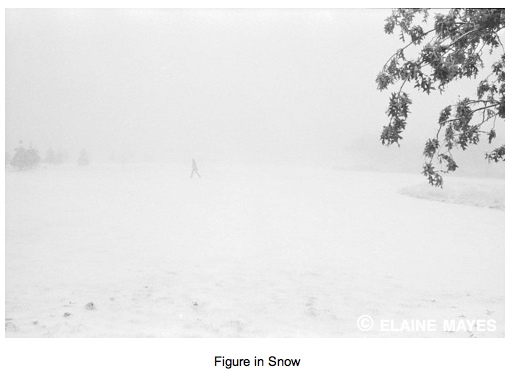
Hampshire College in winter by Elaine Mayes
The art of photography has changed since the conceptual evolution of Post-Modernism in the 1980s and the digital revolution of the 30 years since. One thing that hasn’t changed, photography remains about seeing. Yes, many artists continue to use photography as a springboard for their ideas about the world, but most photographers choose to look. The camera continues to be the tool through which we see and interpret the world.
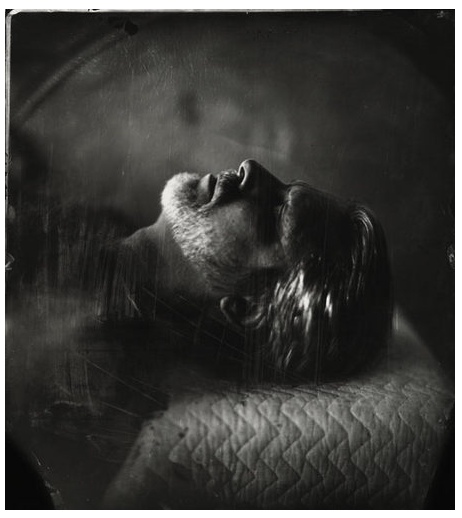
New work by Sally Mann
Sally Mann discusses her new pictures on Joerg Colberg’s Conscientious. She talks at length about seeing. “I am a woman who looks. Within traditional narratives, women who look, especially women who look unflinchingly at men, have been punished… I look, all the time, at the people and places I care about, and I look with both ardor and frank, aesthetic, cold appraisal. And I look with the passions of both eye and heart, but in that ardent heart, there must also be a splinter of ice.” Read her complete essay here.
The Shape of Things to Come
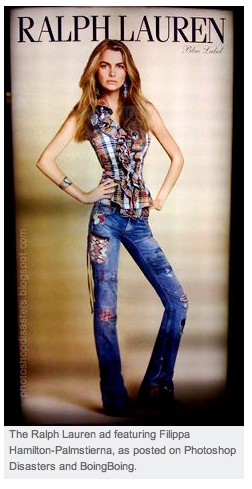
Photoshop mess-terpiece
Size 4 model fired for being too fat. That’s the headline on US Magazine.com that quotes the model in the above picture. For another opinion I checked out The Associated Press‘s version. It seems that the fashion industry is as nasty as everyone says it is. Let’s see–abandoning the American textile worker by manufacturing in sweat shops in Asia, abandoning fashion models when they might grow out of their size 4, abandoning the consumer by pricing clothing out of the reach of anyone but the rich. It is time to doubt the ethics of the fashion industry. I still like to watch Project Runway (actually, that’s the link to the Project Run Gay blog which is the best Runway blog going). In protest, I’m reading labels and not buying anything made in China. That way I can protest an industry’s unfair policies and a county’s colonialist, anti-minority ethics in one sweep.
Last week, in my Digital Photography class, we discussed a bill presented in the British Parliament outlining a Photoshop disclosure law for pictures of women. Advertisers and editors may be required to state how much a picture’s appearance has been digitally altered. I basically think this is a good idea, but it might put some Photoshop geniuses out of business. I started thinking about how Photoshop manipulation has slithered its way into international acceptance. Basically, it started one day in 1982 when an editor at National Geographics Magazine digitally moved a pyramid in Egypt to improve the composition of a cover. Since that moderate adjustment on the location of the Pyramids of Giza, editors and advertisers have had their way with all kinds of shapes. The human body seems to have been the most abused by the photoshopping shape shifters of editorial and advertising content. The advertiser in the above poster tried to limit the reproduction of their visual faux pas by threatening the bloggers over at Boing Boing with legal action. Boing Boing discovered the image on Photoshop Disasters, where they chronicle such manipulations almost daily. Check out this jeans ad.
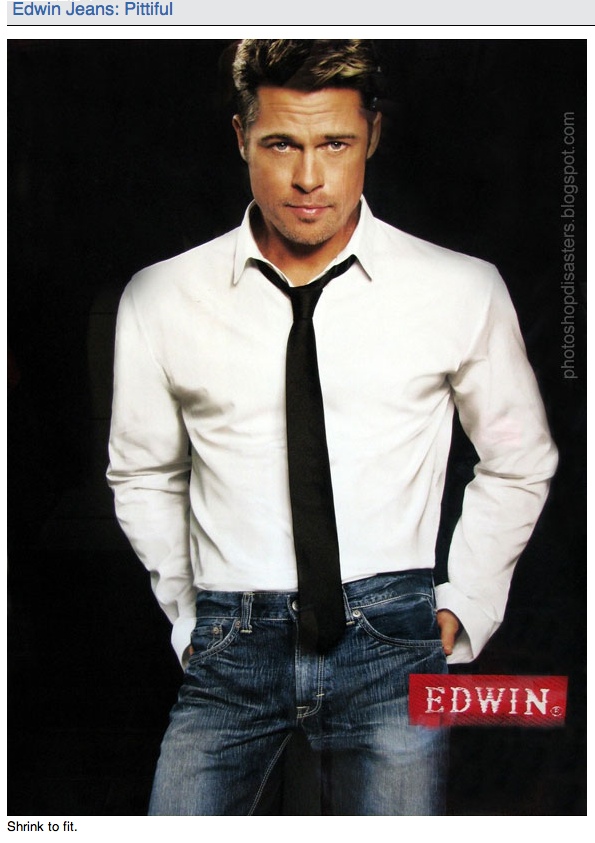
Brad Pittiful
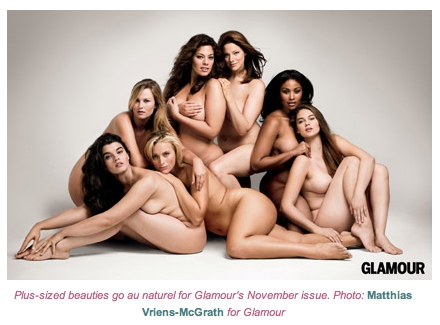
I have traditionally been a fan of hips and I find this trend toward compressing them a bit threatening. Kristen Miller sent me this wonderful picture from Glamour which suggests that it is not too late for the world to become a better place.
 Of course, even the cutest of group portraits can go horribly awry with the misguided assistance of Photoshop.

Paws and Claws-- Oh, my Arm!
About Nadav Kander, Students and B.O.
I was deep into Nadav Kander’s website the other day (following the recommendation of Jorg Colberg) and discovered this picture:
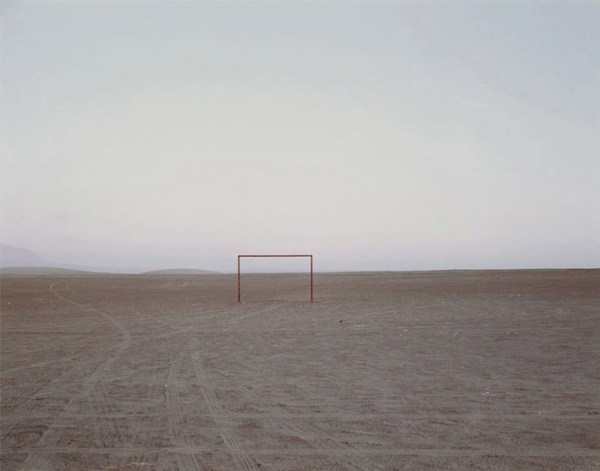
Goal Post, Chile, by Nadav Kander
I posted my Soccer Field, Gobi here two weeks ago. Many readers can simply scroll down to it.
For the first project in two of my current photo classes, I ask students to do research on the web and elsewhere. My Advanced Photography assignment is to choose a work of art (it does not have to be photography) and emulate it in a picture of your own. In my Introduction to Digital Fine Art Photography I ask students to come up with their own project, and then research images on the web that illustrate the same, or similar, concept.
The first assignment is a great idea. Most students have very little understanding of photography’s brief history, or the history of culture in general. I am trying to give them motivation to discover historically relevant art that resonates with them. I then ask them to pay homage by making photographs inspired by the art.
My other first assignment, whose intention is to make students aware of the contemporary art scene, seems to be a bust. The problem is that I let students loose to riffle through the reams of photography on the internet. What they are bringing back to class is a mix of snapshots and commercial work, not photographs mirroring the state of contemporary art. Next time, I’m going to give them blog links and let the army of my favorite photo bloggers guide them.
Here’s a Nadav Kander picture symbolic of the plight of my students trying to do their first assignment.

Field II (Ford Dealership), USA, by Nadav Kander
“Outside of a dog, a man’s best friend is a book. Inside of a dog, it’s too dark to read,” attributed to Groucho Marx.
My students don’t like to read. I’ll stop typing and just show more examples from Nadav Kander’s incredible site.
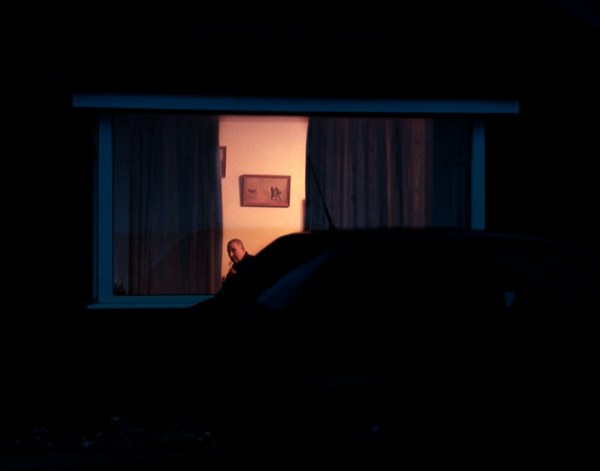
From The Parade, Untitled #37, by Nadav Kander
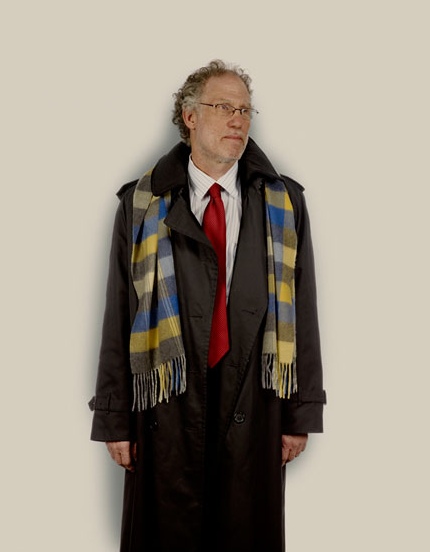
From Obama's People, Robert F. Bauer- President's Personal Lawyer, by Nadav Kander
One thing I like about Nadav Kander and two things I don’t like about Barack Obama. Nadav Kander is a great photographer who is not concerned with the (often self-imposed) limitations photographers face to be considered viable talents.
B.O. really stunk up the place when he refused to meet with His Holiness the Dalai Lama out of fear of alienating the Chinese authorities. He is the first president to do so since the first George Bush. He should have his Nobel rescinded for snubbing a fellow Nobel laureate.
I also don’t like Barack Obama’s pro-war, troop build-up in Afghanistan. It’s not Nobel worthy.
The Hour of Power

From the forthcoming book, American Power, by Mitch Epstein
Holyoke born Mitch Epstein has a new book coming out this month. American Power is a clear eyed visual study of the what, where and how our country is powered. Here’s a quote from Joerg Colbergs review, “Photographically, American Power is nothing but the product of an artist at the prime of his own, yes, artistic power, large-format photography at its finest. It is hard to imagine the energy it must have cost Epstein to produce the different photographs, but the run-ins with law enforcement officials do not seem to have had any impact on the quality of the work.”
Joerg does such an erudite job of reviewing the book that I don’t have to say more about Mitch’s achievement. For my student’s benefit, I think it is more important to alert them to Mitch’s previous book- Family Business. This highly personal collection of pictures created in Holyoke won Epstein many awards, including the prestigious Guggenheim Fellowship.
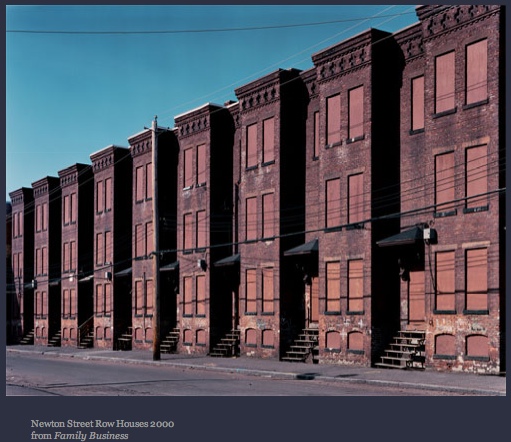
From Family Business by Mitch Epstein
The book presents the story of Mitch’s father. To quote Mitch, “Crucial to his story is that of Holyoke itself. The commercial center died in the 70s, its customers gone to the new supermall. Holyoke became a crack-riddled, arson-wrought town. A recent wave of immigrants turned the formerly “white” downtown Hispanic. The culture clash resonates in the relationship between my Jewish American father and his Puerto Rican tenants and employees.”
By now Holyoke’s 21st Century story is unfolding with a new cast of characters. To better understand what we see as we walk the streets of Holyoke today, I implore students to check out these links and pick-up the book. It is a page turner with great writing and photography.
Now, to discover our personal “hour of power” I want to look at the two pictures above. The tenement buildings in Holyoke were photographed when the sun was low, at sunrise or sunset. The light feathers across the buildings to give their bricks a deep, dark texture. In a sense, the light suggests a romantic view that is quickly undercut by the boarded up windows. I think the balance of sweeping light over the emptiness of the whole scene is the key to the mournful demeanor of the picture.
The low light of the power plant picture (above) seems to be from an early morning exposure. The camera faces the dawn creating an almost godlike glow. The effect is also romantic, except the romance is with the power generating station. Again, Mitch creates a fresh response from the viewer by challenging our expectations.
This acknowledgement of “a certain slant of light” is Mitch’s nod to 20th Century realism within a contemporary context. Here’s a painting from 1930.
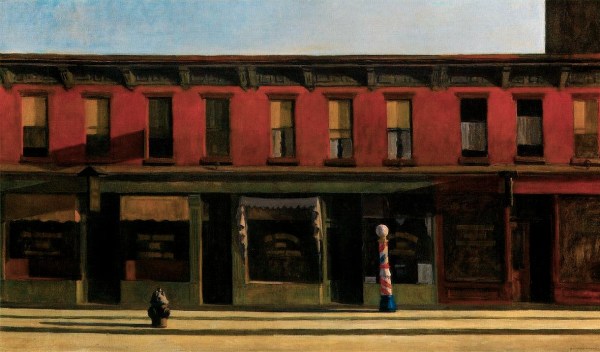
Early Morning Light, 1930, Edward Hopper
In the later part of the 20th Century, Stephen Shore utilized this light in his pioneering color photography:

Holden Street, North Adams, 1974, Stephen Shore

Chevron, By Stephen Shore
Shore’s pictures celebrate the beauty in the everyday. Shore’s Chevron from the 1970s leads to Mitch Eptein’s studies of beauty in what could be construed as ugly. There are lots of examples of ugly beauty in 20th Century art. I want to move onto one more example of the power of light in Mitch’s work.
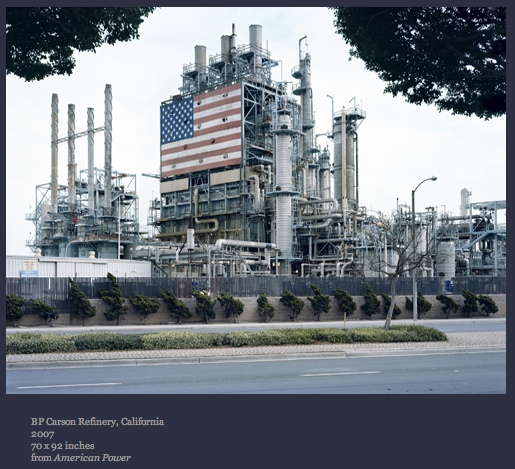
From American Power by Mitch Epstein
My students are prone to use the weather as an excuse. They often say they can’t photograph because the sun isn’t out. Ever since the publication of Robert Frank’s seminal book, The Americans, an overcast day has been the choice time to photograph with a bite. An overcast, or rainy, sky equals bleakness. Mitch Epstein’s power plant above would send a different message if it was framed by puffy clouds in a blue sky. As it is, the American Flag seems riddled with bullet holes.
Probably the greatest photographer of the American Flag is Robert Frank. I won’t show any of his flag masterpieces, but please read the spectacular New Yorker review of his current show on The Americans now in New York.
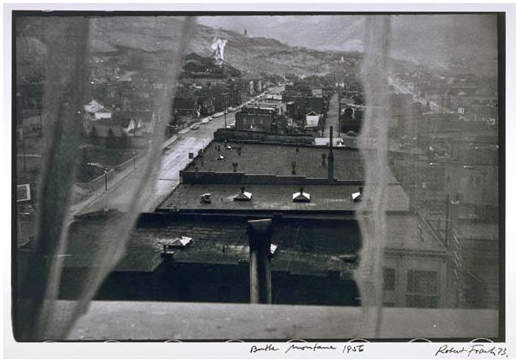
Butte, Montana, 1956, by Robert Frank
Opportunities– Global and Local
New Voices at SocialDocumentary.Net
It has been about a year since the inauguration of http://socialdocumentary.net, a web magazine/catalog/forum for documentary and photojournalistic photography. At it’s inception, founders Glenn Ruga and Barbara Ayotte knew that they wanted to bring socially concerned photographers together and offer them a place to show their projects. Their open concept has stimulated a diverse, web based round table of documentary photographers and photojournalists from all over the world. Check out their almost 200 exhibits.
 Learn more about the SDN competition here.
To kick off the second year of activity SocialDocumentary.Net is inviting photographers to document the global recession in any, or all, of its myriad manifestations. Browse through the multicultural portfolios to see how photographers from every corner of the globe are thinking globally and photographing locally.

View by HCC alumni Jeffery Byrnes
Thinking about photographing locally gives me a great segue to the HCC Photo Club Show and Competition to be shown at the Holyoke Community College Media Arts Center (MAC) Open House on Wednesday, October 28, 2009, from 4:30-6:30. Unless you have a wedding to go to, save this date.
Above is the very first entry into the show. This is the first of three entries that Jeffery Byrnes sent me yesterday. I’ve also used one of Jeff’s submissions as the thumbnail for our new Facebook group HCC Photo Club. Area photographers might find some inspiration with Jeff. He graduated from HCC as a photo major, was president of the HCC Photo Club and is, most likely, Holyoke’s major blogger. Here are some of his many links: LenShare.Com,
And, along with HCC alumnus Tim Lastowski they run the True Resolution photography studio.
As for submissions from other Club members, uploading pictures to the Googlegroups has been a failure. I’m moving the Photo Club over to Facebook for our main place of communication. Please upload your submissions to the
Please keep your uploads small (below 300K) or we’ll max out our space allowed on Facebook. Check here for more show and competition guidelines.
 The Coruscating Camera